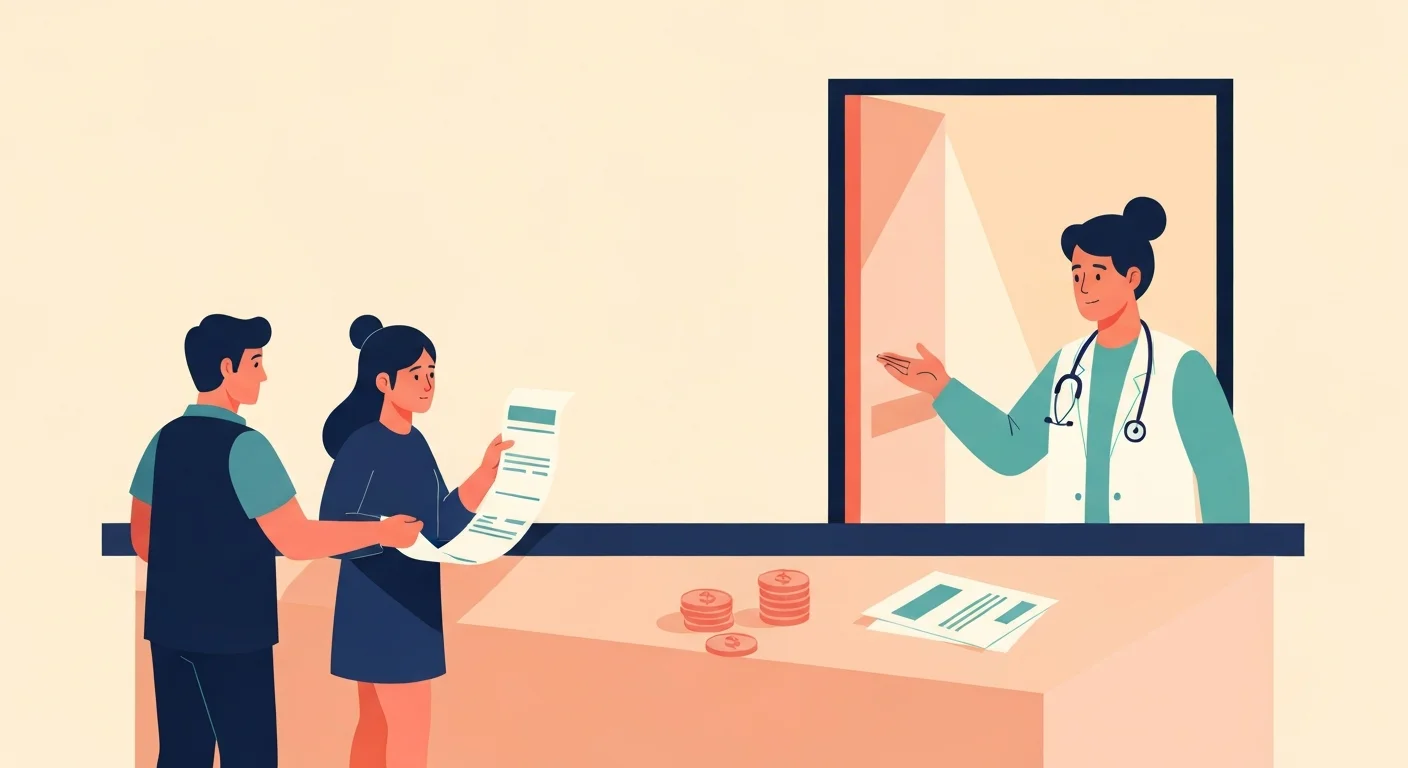
Can't Pay Your Hospital Bill in the Philippines? Complete 2026 Guide
Quick Answer: Hospitals cannot demand a deposit before emergency care (RA 10932) or detain you for an unpaid bill (RA 9439). Ask the hospital's Medical Social Service office to classify you (indigent, partial pay, or full pay), confirm PhilHealth was applied, and take a ward bed at a DOH-retained hospital, which is ₱0 under Zero Balance Billing. Then go to the Malasakit Center to stack DOH MAIFIP, PCSO, and DSWD AICS on the remaining balance. LGU aid, NGOs, OWWA, or SSS cover what's left. A promissory note is the last resort, not the first move.
Table of Contents
- What are your legal rights if you can't pay a hospital bill?
- What's the exact order of operations, step by step?
- How much can each assistance source actually give you?
- How does hospital patient classification work?
- How do you make sure PhilHealth applies to your bill?
- What is Zero Balance Billing and how do you qualify?
- How do you use a Malasakit Center to stack aid?
- Do you need a guarantee letter, and from whom?
- What other help exists: LGU, NGOs, OWWA, SSS, and HMOs?
- What if you still can't pay anything at all?
- Helping with a hospital bill from overseas
- Frequently Asked Questions
- Conclusion
What are your legal rights if you can't pay a hospital bill?
You have two legal protections before you owe a single peso. First, RA 10932 bars any hospital or clinic, public or private, from requesting a deposit or advance payment as a condition for basic emergency care, or from refusing to treat you on that basis. Hospital officials and staff who violate it face 6 months and 1 day to 2 years and 4 months in prison, a ₱100,000-300,000 fine, or both. If the violation follows hospital policy, the responsible director or officer faces 4 to 6 years in prison or a ₱500,000-1,000,000 fine, and three repeat policy violations can cost the hospital its license. Second, RA 9439 prohibits detaining you (or a deceased relative's body) over an unpaid bill once you're able to leave. RA 9439 does not cover patients who stayed in private rooms. Read the full breakdown, including how to file a complaint, in our guides to the anti-hospital deposit law and hospital detention over unpaid bills. Seniors and PWDs also carry a standing 20% discount plus VAT exemption on medical services (see our senior citizen healthcare benefits and PWD ID health benefits guides) that stacks on top of everything below.
What's the exact order of operations, step by step?
Work through these seven steps in order. Each one either reduces the bill or unlocks the next source of aid, so skipping ahead usually means leaving money on the table.
- Know your rights on the spot. No deposit can be demanded in an emergency (RA 10932); you cannot be detained for nonpayment (RA 9439). Cite these if staff push back.
- Get classified by the Medical Social Service office. Ask the admitting nurse or ER staff for a referral. Classification (indigent, partial pay, or full pay) sets the hospital's own share of your bill under DOH Administrative Order 2015-0031. See our patient classification guide.
- Confirm PhilHealth is applied. Give your PhilHealth number and a valid ID at admission, but a PhilHealth ID is not required. Every Filipino is automatically covered under the Universal Health Care Act (RA 11223). If you're unsure of your membership, the PhilHealth desk at the Malasakit Center can help you register or verify it.
- Take a ward bed at a DOH hospital. Under Zero Balance Billing (DOH Department Order 2026-0443), admission to a service ward at a DOH hospital covers medically necessary inpatient services for any Filipino, with no indigency assessment. Ask about a charity/service ward if a DOH hospital isn't nearby.
- Go to the Malasakit Center. One desk stacks DOH MAIFIP, PCSO MAP, and DSWD AICS on whatever balance remains. Start at our Malasakit Center guide.
- Tap LGU, NGO, and OFW/employee channels. Your city or municipal government, NGOs, OWWA (for OFWs), or SSS benefits can close what's left. See the LGU medical assistance guide.
- Sign a promissory note only as a last resort. If a balance remains, RA 9439 lets you leave on a promissory note instead of staying detained. Details in our promissory note guide.
How much can each assistance source actually give you?
There is no single "hospital bill fund." Aid comes from several agencies that layer on top of each other, and the amount depends on your classification, hospital type, and diagnosis. Use this table to see where to start and roughly what to expect, then confirm exact figures with each agency, since amounts are case-by-case and change with the annual budget.
| Source | Typical amount (2026) | Where to apply |
|---|---|---|
| PhilHealth case rate | Auto-deducted per benefit package; Zero Balance Billing = ₱0 balance for ward admission at DOH hospitals | Hospital billing/PhilHealth desk at admission |
| DOH MAIFIP | For eligible costs left after PhilHealth, HMO, and other DOH programs; regular ward costs are not ordinarily charged to it; funded at ₱51.6 billion under the 2026 GAA (RA 12314) | Malasakit Center or hospital Medical Social Service office |
| PCSO MAP (often still called IMAP) | Guarantee Letter to the hospital/pharmacy; no fixed percentage published for 2026, evaluated per case | Malasakit desk or nearest PCSO branch |
| DSWD AICS | Cash up to ₱10,000, or a Guarantee Letter; GLs go up to ₱150,000, and more in grave cases | DSWD AICS guide, Crisis Intervention Unit, Field Office, or Malasakit desk |
| LGU (mayor's office/CSWDO) | Varies by city or municipality; residency-based | Local social welfare office where you're a registered resident |
| OWWA (OFWs) | MEDplus up to ₱50,000 (equal to the PhilHealth case rate, for active OWWA and PhilHealth member-OFWs with dreaded diseases); WAP medical aid reportedly up to ₱20,000 | OWWA guide, OWWA regional office |
| SSS | Sickness Benefit: 90% of average daily salary credit, up to 120 days/year; Salary Loan of up to two months' average salary credit, ₱70,000 at most | SSS sickness benefit guide, My.SSS |
| NGOs/foundations | Varies by organization; each sets its own requirements and funds | See our NGO medical assistance directory |
| Employer HMO | Second payer after PhilHealth, up to your plan's Maximum Benefit Limit | Employer HR / HMO coordinator at the hospital |
How does hospital patient classification work?
Classification decides the hospital's own share of your bill, and the Malasakit Center's social worker also uses the DOH patient classification policy when assessing your eligibility for assistance. Under DOH Administrative Order 2015-0031 (July 20, 2015), which repealed the older AO 51-A and its Class A to D system, government hospitals sort patients into three groups: indigent or poor patients, whose treatment expenses the hospital shoulders with no patient share; partial pay patients, for whom the hospital covers up to 90% of treatment-related fees; and full pay patients, who pay all fees. To be classified, bring one of these: your latest income tax return, pay slip, or other proof of income, or a Certificate of Indigency from the DSWD, your municipal social welfare office, or your barangay chairman. Getting classified as indigent or partial pay is the gateway step: Malasakit, PCSO, and DSWD aid layer on top of the hospital's own share, not instead of it. Full walkthrough in our patient classification guide.
How do you make sure PhilHealth applies to your bill?
Give the admitting staff your PhilHealth number and a valid ID. A PhilHealth ID or Member Data Record is not required to use your benefits, and the hospital files the claim and deducts the case rate from your bill. Under the Universal Health Care Act (RA 11223), every Filipino is automatically a PhilHealth member, and the law says failure to pay premiums does not prevent you from using benefits. Confirm your eligibility at the hospital's PhilHealth desk. If you're unsure of your membership, don't skip this step: the PhilHealth desk at the Malasakit Center can help you register or verify it before your other aid applications proceed, since every downstream program assumes PhilHealth pays first. For the specific peso amounts covered per condition, see our PhilHealth hospitalization benefits and PhilHealth benefits coverage guide. If a claim gets rejected or you need to file manually, follow our how to file a PhilHealth claim guide.
What is Zero Balance Billing and how do you qualify?
Zero Balance Billing (ZBB, also called No Balance Billing) means a ₱0 out-of-pocket balance for your confinement in a service ward, covering medically necessary inpatient services: medicines, supplies, labs and diagnostics, professional fees, operations, and critical care. Under DOH Department Order 2026-0443 (September 18, 2026), ZBB applies to all Filipinos admitted to a ward bed at a DOH hospital, with no indigency assessment. PhilHealth is charged first, then ZBB funds, then DOH MAIFIP for costs left over. The order covers DOH hospitals including GOCC hospitals, so ask the billing office whether NKTI, the Lung Center, Philippine Heart Center, or PCMC applies it. It does not cover non-DOH public facilities, except six LGU hospitals DOH is piloting ZBB in this year, and private-room or pay-ward admissions still get standard case-rate benefits with co-pay. Private hospitals are outside the DOH program, but PhilHealth's no co-payment rule for basic/ward accommodation (PhilHealth Circular 2020-0024) covers accredited private hospitals too. The catch is that private hospitals are only required to set aside at least 10% of their beds as basic/ward (RA 11223), so a free ward bed may not be available. Ask the billing office. If the hospital runs out of a covered medicine or supply, the DOH order says it cannot make a ZBB patient buy it at personal expense. The order covers service wards only, not pay wards. The Palace said on September 27, 2026 that ZBB now reaches regular hospital rooms, but we found no DOH or PhilHealth issuance for that, so don't assume a private room is covered. Full details, including which hospitals qualify, in our Zero Balance Billing guide and charity ward guide; you can also check rates at specific facilities like East Avenue Medical Center through our broader hospital rates hub.
How do you use a Malasakit Center to stack aid?
A Malasakit Center is a single desk, physically located inside DOH-retained hospitals, PGH, and some LGU and other public hospitals under RA 11463, that co-locates DOH, DSWD, PCSO, and PhilHealth staff so you don't have to visit four separate offices. Neither RA 11463 nor the joint order that runs the centers (Joint Administrative Order 2020-0001) requires an appointment, so you can walk in. The hospital's medical social worker interviews you on the standard Unified Intake Sheet and issues a Certificate of Eligibility, and the PCSO, DSWD, and DOH desks then recommend the assistance. The PhilHealth desk can help you register or verify your PhilHealth membership, and PhilHealth is charged first, after any senior or PWD discount. DSWD can release up to ₱10,000 as cash; other aid goes out as a Guarantee Letter or claim slip addressed to the hospital. A DOH regional office has reported the 166th Malasakit Center in the country, so there are at least that many. If your hospital doesn't have a center, apply at the nearest PCSO or DSWD field office instead. Each agency gives its own aid there, while PhilHealth benefits and DOH MAIFIP go through your hospital, and PCSO also takes applications online through its Online MAP portal. Program-by-program depth: PCSO medical assistance, DSWD AICS, DOH MAIFIP.
Do you need a guarantee letter, and from whom?
A Guarantee Letter (GL) is an agency's written commitment to pay the hospital directly, not cash in hand, and it's how PCSO and DSWD typically release aid above small cash thresholds. DOH MAIFIP assistance is assessed by the hospital's Evaluating Officer, usually through the Medical Social Service office or Malasakit Center, and is applied to your bill. At a January 7, 2026 Palace briefing, then Health Secretary Teodoro Herbosa said the DOH gives guarantee letters only to private hospitals it has an agreement with. Where this gets confusing in 2026: Section 19 of the 2026 GAA (RA 12314) bars elected officials, candidates, and their representatives from taking part in the actual distribution of aid in programs like MAIFIP, and Zero Balance Billing needs no politician's letter. Yet the Senate's Senate Assist portal still offers its own Guarantee Letters, which it says can be used until December 31 of the year they are issued. DSWD's GL issuance was halted from November 30, 2025 and resumed in early January 2026, its direct cash aid was suspended from January 5, 2026 pending the release of 2026 funds, and as of June 22, 2026 DSWD GLs are accepted at 262 participating Mercury Drug branches for medicines. Don't wait on a politician's letter; go straight to the Malasakit Center or your agency's own office. See our full guarantee letter guide for the current process at each agency.
What other help exists: LGU, NGOs, OWWA, SSS, and HMOs?
If national programs still leave a gap, several other channels can help close it. Your city or municipal government runs its own medical assistance through the mayor's office or CSWDO/MSWDO, residency-based and typically reached through a referral from the hospital's medical social worker; see our LGU medical assistance guide. NGOs like the Philippine Cancer Society, ICanServe, Caritas Manila, Kythe Foundation, and the GMA Kapuso and ABS-CBN Tulong Center foundations run their own programs with their own requirements; our NGO directory lists contact details. Active OWWA-member OFWs with active PhilHealth can claim OWWA's MEDplus for dreaded diseases (equal to the PhilHealth case rate, up to ₱50,000), and OWWA's WAP covers medical aid for illnesses MEDplus does not (OWWA regional officers have cited up to ₱20,000); see OWWA medical assistance. SSS members can file a Sickness Benefit (90% of average daily salary credit, up to 120 days/year) or take a Salary Loan of up to two months' average salary credit (₱70,000 at most); details in our SSS sickness benefit guide and medical loans guide. If you have employer HMO coverage, it coordinates as second payer after PhilHealth's case rate is deducted, up to your plan's Maximum Benefit Limit; if a claim is denied or delayed, see HMO claim denied and HMO vs PhilHealth. For dialysis or cancer specifically, PhilHealth's expanded packages (up to 156 hemodialysis sessions a year, and a breast cancer Z-Benefit of up to ₱1.4 million) plus DOH's Cancer Assistance Fund can cover a large share of the cost; see our free dialysis and cancer financial assistance guides.
What if you still can't pay anything at all?
If you've worked through classification, PhilHealth, Zero Balance Billing, Malasakit, and every other channel above and a balance remains, RA 9439 still protects you: the hospital cannot keep you or a deceased relative's body over the unpaid amount. You can leave and demand your medical certificate and discharge papers by executing a promissory note for the balance, secured by either a mortgage or a co-maker who is jointly and severally liable with you. Ask the hospital's Medical Social Service (MSS) office about assistance for an unpaid balance. Walk through the exact steps, what the hospital can and can't require, and how to escalate if staff resist, in our hospital bill promissory note guide.
Helping with a hospital bill from overseas
If you are reading this from abroad, here is what the peso figures in this guide are worth in dollars, so you can size the gap you may need to cover. Converted at about US$1 = ₱62.75 (late September 2026); rates move, so check a live converter before you send money.
| Figure in this guide | In pesos | Approximate US$ |
|---|---|---|
| DSWD AICS cash assistance | up to ₱10,000 | up to about US$160 |
| DSWD AICS via Guarantee Letter | up to ₱150,000 | up to about US$2,390 |
| OWWA MEDplus (OFWs) | up to ₱50,000 | up to about US$800 |
| OWWA Welfare Assistance Programme | up to ₱20,000 | up to about US$320 |
| Ward admission at a DOH-retained hospital | ₱0 under Zero Balance Billing | US$0 |
If you're managing this from abroad, work the phone in this order during the first few hours:
- Call the hospital's billing department or Medical Social Service office — not the nursing station, which can't discuss money or paperwork. Ask for whoever handles inquiries from family abroad.
- Ask them to email or fax an itemized running bill ("statement of account"). Most billing offices can produce one mid-confinement on request.
- Confirm with billing whether the patient's PhilHealth has already been applied — don't assume it has. If the patient's membership is unclear, ask whether the PhilHealth desk at the hospital's Malasakit Center can help register or verify it (below).
Getting money there fast. Two real options: pay the hospital directly, or remit to a relative who pays in person. Paying directly is safer and leaves a paper trail — ask billing for the hospital's own bank details in writing, and whether they take a credit or debit card payment over the phone. Remitting to a relative can be faster where phone payment isn't offered, but it's less secure: confirm the relative's identity, and get the hospital to confirm in writing once a payment actually posts, not just when it's sent. Build in a buffer either way — an international transfer can take a few business days, and discharge may wait until funds are confirmed received.
Authorising someone to act for the patient. A relative signing discharge papers or negotiating on the patient's behalf needs a Special Power of Attorney (SPA). The simplest route is executing it in person at the nearest Philippine Embassy or Consulate: a consular officer notarizes it directly, and it then generally needs no separate apostille to be valid in the Philippines. Appear with a government ID; the Philippine Consulate General in New York, for example, notarizes an SPA within 2-3 business days of the appointment, though timing varies by post. Signing before a local notary instead means you'll also need an apostille from your own country's authority first. Start at the DFA's Office of Consular Affairs to find your nearest post.
What a relative on the ground can walk into. These programs help, but most need the patient or an authorized representative with documents. PCSO also takes applications online through its Online MAP portal, but none of it works by phone. A Malasakit Center desk, where one exists, can help register or verify the patient's PhilHealth membership and route the balance to PCSO's MAP and DSWD's AICS in one visit; use ClinicFinderPH's Malasakit Center near-you directory to check which nearby hospitals have one. Aid from the local government or a congressional office is another possible channel, but RA 12314 Sec. 19 keeps politicians out of the actual distribution of MAIFIP and similar aid, so go to Malasakit first.
What only you can do from abroad. Fund the bill, chase whether PhilHealth is actually posted, get the SPA notarized or apostilled, and put any negotiation with billing in writing — an email holds up better than a call if a dispute comes up later.
Can the hospital keep the patient until the bill is paid? No. Under the Anti-Hospital Detention Law (Republic Act No. 9439), a hospital cannot detain a patient, or withhold a body, over an unpaid balance once the patient is fit to leave, unless the patient stayed in a private room. The balance still has to be settled, and a promissory note, sometimes with a co-maker, is the normal way that happens — not a red flag. This is general information, not legal advice for your case; confirm your options with the hospital's own Medical Social Service office.
What PhilHealth actually covers. For a member, the case-rate benefit is deducted automatically at an accredited hospital (see how to confirm PhilHealth applies above). It does not cover a non-accredited facility or costs above the case-rate ceiling.
Frequently Asked Questions
Paano kung hindi kayang bayaran ang hospital bill?
Follow the order of operations above: assert your rights (no deposit, no detention), get classified by the Medical Social Service office, confirm PhilHealth is applied, take a ward bed at a DOH hospital for Zero Balance Billing, then go to the Malasakit Center to stack DOH, PCSO, and DSWD aid. A promissory note is your legal fallback if a balance still remains.
Is it true that a hospital cannot ask for a deposit before treating me in an emergency?
Yes. Under RA 10932, no hospital or clinic, public or private, can demand a deposit or advance payment as a condition for basic emergency care, and it cannot refuse to treat you on that basis. Cite the law on the spot; violations can be reported to DOH's Health Facilities Oversight Board.
Can I be detained in the hospital if I can't pay?
No. RA 9439 prohibits hospitals from detaining a patient, or a deceased patient's body, for nonpayment once the patient is able to leave. You can request release by executing a promissory note instead. RA 9439 does not cover patients who stayed in private rooms.
What is Zero Balance Billing, and do I get it automatically?
Zero Balance Billing means a ₱0 out-of-pocket balance for your ward confinement at a DOH hospital, and it applies to all Filipinos admitted to a service ward. It needs no indigency assessment, but you must be in a ward bed, not a private room. See our Zero Balance Billing guide.
Do I need a congressman's or senator's letter to get medical assistance?
No, not for Zero Balance Billing or MAIFIP. Section 19 of the 2026 GAA (RA 12314) bars politicians from taking part in the actual distribution of aid in programs like MAIFIP, Zero Balance Billing asks for no extra paperwork, and MAIFIP's document list has no politician's letter. The Senate's Senate Assist portal still offers its own Guarantee Letters. Go directly to the Malasakit Center rather than waiting on a political referral.
How much can PCSO or DSWD actually give me?
DSWD says an AICS Guarantee Letter can cover up to ₱150,000, and grave cases may receive more. Cash assistance goes up to ₱10,000. PCSO's MAP has no fixed published ceiling for 2026; it issues a Guarantee Letter sized to your case after review. See our DSWD AICS guide and PCSO medical assistance guide.
What if I'm not a PhilHealth member at all?
Go to the Malasakit Center's PhilHealth desk, which can help you register or verify your membership (everyone is automatically covered under RA 11223) before routing you to PCSO, DOH, and DSWD aid. Sorting out your membership matters even mid-confinement, since PhilHealth is meant to pay first before other programs cover the remainder.
What happens if I sign a promissory note and still can't pay it later?
RA 9439's promissory note must be secured by a mortgage or a co-maker jointly and severally liable with you, and it lets you leave the hospital immediately with your medical certificate and discharge papers. Ask the hospital's Medical Social Service (MSS) office about assistance for an unpaid balance. Read the full process in our promissory note guide.
Can I pay a Philippine hospital bill directly from the US, Canada, or elsewhere abroad?
Yes. Ask the hospital's billing department for their bank account details in writing and send an international transfer, or ask if they take a credit or debit card payment over the phone. This is generally safer and easier to trace than remitting cash to a relative to pay on your behalf.
Do I have to be physically present in the Philippines to apply for Malasakit, PCSO, or DSWD assistance?
Almost always, yes — these programs are built around the patient or an authorized representative appearing in person with identification and documents at the hospital or a local office, though PCSO also takes applications through its Online MAP portal. From overseas, your role is to fund the bill, get a Special Power of Attorney notarized so a relative can act on the patient's behalf, and follow up on paperwork by phone or email.
How do I get a Special Power of Attorney to a relative in the Philippines while I'm abroad?
Book an appointment at the nearest Philippine Embassy or Consulate and have the SPA notarized there in person; notarized that way, it typically needs no separate apostille to be used in the Philippines. If you sign it before a local notary instead, it will usually need an apostille from your own country's competent authority first. Start at the DFA's Office of Consular Affairs.
Will my overseas health insurance or HMO cover a relative's hospital bill in the Philippines?
Usually not. A foreign HMO or travel insurance policy typically covers you as the policyholder, not other family members, and it usually does not pay a Philippine hospital directly. Check your policy. Whatever coverage the patient has locally — their own PhilHealth membership or a Philippine employer HMO — is what applies to their bill.
Conclusion
Getting a hospital bill down to something you can actually pay is a sequence, not a single application: assert your rights, get classified, apply PhilHealth, take a ZBB ward bed, then stack Malasakit, PCSO, and DSWD aid before turning to LGU, NGO, or promissory-note options. Start with our Malasakit Center guide and patient classification guide if you're at the hospital right now, or check your PhilHealth hospitalization benefits to confirm what's already covered. You can also search ClinicFinderPH for accredited hospitals near you or browse facilities by location before you're admitted, so you know which nearby hospitals offer Zero Balance Billing wards.
Need a government hospital right now? Find hospitals near you — sorted by distance, with directions and contact details.