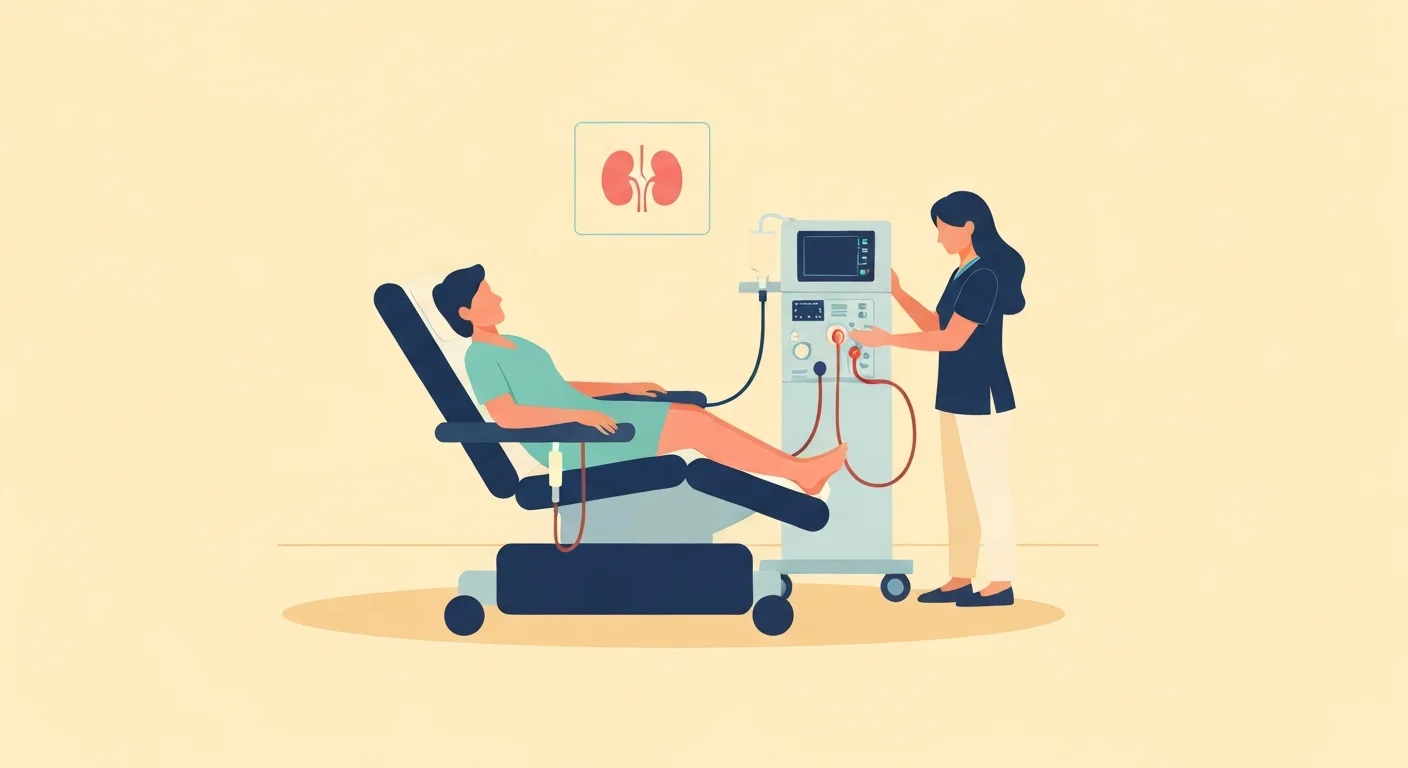
Free Dialysis in the Philippines 2026: PhilHealth's 156 Sessions & Where to Get More Help
Quick Answer: PhilHealth now covers 156 hemodialysis sessions a year at ₱6,350 per session (about ₱990,600/year) for Chronic Kidney Disease Stage 5 patients registered in the PhilHealth Dialysis Database (PDD) — enough for roughly three sessions a week, effectively free at accredited facilities charging at or near the PhilHealth rate. Peritoneal dialysis is covered separately through a Z-Benefit package. When sessions, medicines, or facility charges go beyond what PhilHealth pays, patients stack DOH MAIFIP, DSWD AICS, and PCSO assistance — usually coordinated through a hospital's Malasakit Center.
This guide is a spoke of our hospital bill assistance hub — start there for the full playbook on stacking government aid for any hospital bill, not just dialysis.
Libre ang Dialysis? PhilHealth 156 Sessions Bawat Taon (2026)
Mag-subscribe sa YouTubeTable of Contents
- How much does PhilHealth cover for dialysis in 2026?
- How do you register in the PhilHealth Dialysis Database (PDD)?
- What if you need peritoneal dialysis instead?
- What happens when your dialysis costs go beyond PhilHealth?
- How does DOH MAIFIP help with dialysis costs?
- How does DSWD AICS help dialysis patients?
- What about PCSO for dialysis assistance?
- Does PAGCOR help with dialysis costs?
- What if you're being treated at NKTI specifically?
- Comparing every dialysis funding source
- Frequently Asked Questions
- Conclusion
How much does PhilHealth cover for dialysis in 2026?
PhilHealth covers 156 hemodialysis sessions per year at ₱6,350 per session — about ₱990,600 a year — for patients diagnosed with Chronic Kidney Disease Stage 5 who are registered in the PhilHealth Dialysis Database (PDD). This is up from ₱4,000 per session and roughly 90 sessions a year under the old rules. The expansion took effect October 9, 2024 and remains in force through 2026.
At 156 sessions a year, coverage lines up with the standard maintenance schedule of about three sessions a week, all year round. The benefit covers hemodialysis performed inpatient, outpatient, or in an emergency setting, plus anemia-management medicines, laboratory tests, and dialysis supplies tied to the session — not just the machine time itself. If your facility charges at or near the ₱6,350 PhilHealth rate, your out-of-pocket cost for a covered session can land at ₱0.
For the inpatient side of kidney care — admissions, surgery, and other case rates — see our PhilHealth hospitalization benefits guide.
How do you register in the PhilHealth Dialysis Database (PDD)?
Registration in the PDD happens through your accredited dialysis facility, not through a separate patient-filed application — the facility enrolls CKD Stage 5 patients into the database as part of setting up and filing your hemodialysis benefit. There is no publicly documented step-by-step patient process beyond this, so the most reliable move is to ask your dialysis center's billing or PhilHealth desk directly when you start treatment, and confirm your PDD registration is active before you rely on the 156-session benefit for a full year of care.
Because the benefit is tied to registration, don't assume coverage is automatic just because you're a PhilHealth member — confirm with your facility that your CKD Stage 5 diagnosis and PDD enrollment are on file before your maintenance schedule begins, so sessions aren't billed at full price while paperwork catches up.
What if you need peritoneal dialysis instead?
PhilHealth covers peritoneal dialysis (PD) through a separate Z-Benefit package: ₱389,640–₱510,140 a year for adults, up to ₱510,140–₱1,269,000 a year for pediatric patients, plus ₱71,500 for PD catheter insertion. As of PhilHealth Advisory PA2026-0013 (February 10, 2026), the automated peritoneal dialysis (APD) sub-benefit for children as young as 6 months is still a pilot program, not yet fully standard coverage — confirm current pediatric APD availability with your provider.
PD lets patients dialyze at home using the abdominal lining as a filter, instead of visiting a center several times a week. We cover eligibility, enrollment steps, and a full CAPD-vs-hemodialysis breakdown in our dedicated PhilHealth peritoneal dialysis (CAPD) coverage guide — read that if PD is the modality you or your nephrologist are considering.
What happens when your dialysis costs go beyond PhilHealth?
When sessions, medicines, or facility charges exceed what PhilHealth pays, Filipino dialysis patients typically stack four additional sources: DOH's MAIFIP, DSWD's AICS, PCSO's IMAP, and — depending on the hospital — ad hoc assistance through PAGCOR or the facility's own medical social service department. None of these replace PhilHealth; they layer on top of it to close whatever gap remains after your PhilHealth case rate or Z-Benefit is applied.
The fastest way to access more than one of these at once is through a hospital's Malasakit Center, a one-stop desk created under the Malasakit Center Act (RA 11463). As of mid-2025 there were 167 Malasakit Centers nationwide, having assisted over 17 million patients, coordinating PhilHealth, DOH, PCSO, and DSWD desks in a single visit. Aid is typically released as cash up to ₱10,000 or a Guarantee Letter above that, and can also cover transport, food, burial, and assistive devices tied to your case. See our full Malasakit Center guide for how to walk through this process.
How does DOH MAIFIP help with dialysis costs?
DOH's Medical Assistance for Indigent and Financially Incapacitated Patients (MAIFIP) fund now extends to free-standing dialysis clinics, not just hospital-based dialysis units — meaning patients dialyzing outside a hospital ward can still draw on MAIFIP for costs above what PhilHealth covers. MAIFIP has no separate patient application; it's accessed through the hospital or clinic's Malasakit Center desk or medical social service office, which assesses your case and applies the fund directly against your bill.
MAIFIP is the "payer of last resort" — it only steps in after your PhilHealth benefit is applied first, so keeping your PhilHealth membership and PDD registration current directly affects how much of a gap MAIFIP has to cover. Our DOH MAIFIP guide covers the full 2026 budget, coverage areas, and how the fund interacts with Zero Balance Billing.
How does DSWD AICS help dialysis patients?
DSWD's Assistance to Individuals in Crisis Situations (AICS) gives ₱1,000 to ₱150,000 in medical aid, released as cash for smaller amounts or a Guarantee Letter direct to the facility for larger ones — and unlike a one-time payout, dialysis patients can receive continuing monthly assistance when a medical social worker recommends it, since dialysis is an ongoing rather than one-time cost. At the National Kidney and Transplant Institute specifically, DSWD documented ₱10,000 in cash aid to 160 patients in 2023 through this route, with continuing monthly support possible case by case.
Because dialysis is chronic, this monthly-renewal option matters more here than for a single hospital admission. Apply at a Malasakit Center desk, a DSWD Field Office, or the Crisis Intervention Unit — our DSWD AICS guide walks through the full requirements list and application steps.
What about PCSO for dialysis assistance?
PCSO's Medical Assistance Program (MAP), often still called IMAP, provides supplemental help for dialysis sessions and related medicines like erythropoietin, on top of whatever PhilHealth already covers — released as a Guarantee Letter to the facility rather than cash, with the covered amount assessed case by case. If you've seen older guides claim PCSO covers a fixed "14 sessions on top of 90," that figure predates PhilHealth's 156-session expansion and is outdated — do not rely on it. PCSO's current session-specific policy for dialysis isn't published in a way that can be confirmed here, so ask your Malasakit desk or nearest PCSO branch for the current terms before assuming a specific number.
For the full PCSO application process, documents, and how it stacks with MAIFIP and AICS, see our PCSO medical assistance guide.
Does PAGCOR help with dialysis costs?
PAGCOR has provided charitable medical assistance to dialysis patients on a case-by-case basis, but this isn't a standing, published program with fixed amounts or a formal application process the way MAIFIP, AICS, or PCSO IMAP are. If you're hoping to draw on PAGCOR assistance for dialysis costs, treat it as a possibility worth asking about — through your hospital's Malasakit Center or PAGCOR directly — rather than a guaranteed line item you can plan your budget around.
What if you're being treated at NKTI specifically?
The National Kidney and Transplant Institute (NKTI) has no separate dialysis fund of its own — instead, its Medical Social Service Department refers indigent patients to DSWD AICS for cash or continuing monthly assistance, the same route covered above. This is on top of the same PhilHealth hemodialysis benefit (156 sessions/year at ₱6,350) that applies at any accredited facility, plus NKTI's Zero Balance Billing for ward-level admissions.
If NKTI is your treatment center, our dedicated NKTI rates, fees, and dialysis cost guide covers ward billing, the kidney transplant Z-Benefit package, and how to start treatment there — read that alongside this guide rather than duplicating the NKTI-specific details here.
Comparing every dialysis funding source
Here's how the pieces fit together once PhilHealth's session-based benefit is applied.
| Source | What it covers for dialysis | Typical amount | How to access |
|---|---|---|---|
| PhilHealth Hemodialysis | 156 sessions/year, CKD Stage 5, PDD-registered | ₱6,350/session (~₱990,600/year) | Accredited dialysis facility |
| PhilHealth PD Z-Benefit | CAPD/APD, adult and pediatric, catheter insertion | ₱389,640–₱1,269,000/year + ₱71,500 catheter | PhilHealth-contracted PD provider |
| DOH MAIFIP | Gap above PhilHealth, incl. free-standing dialysis clinics | No published patient cap; case-by-case | Hospital Malasakit Center or medical social service |
| DSWD AICS | Cash or GL for remaining costs; can renew monthly | ₱1,000–₱150,000 (₱10,000/patient documented at NKTI, 2023) | Malasakit desk, DSWD Field Office/CIU |
| PCSO IMAP | Supplemental sessions, erythropoietin, GL to facility | Case-by-case percentage of cost | Malasakit desk, PCSO branch, online (NCR) |
| PAGCOR | Ad hoc charitable assistance, not a standing program | Not published | Ask directly, or via Malasakit Center |
| Malasakit Center | Coordinates all of the above in one visit | Cash ≤₱10,000 or GL above | Any DOH hospital with a center |
Frequently Asked Questions
How many free dialysis sessions does PhilHealth cover in 2026?
156 hemodialysis sessions per year, at ₱6,350 per session — about ₱990,600 in total annual coverage — for CKD Stage 5 patients registered in the PhilHealth Dialysis Database. That's roughly three sessions a week for the full year, the standard maintenance schedule.
How do I register for the PhilHealth Dialysis Database (PDD)?
Through your accredited dialysis facility, not a separate patient application. The facility enrolls you in the PDD as part of filing your hemodialysis benefit. Confirm with your facility's PhilHealth or billing desk that your registration is active before assuming a full year of sessions is covered.
What if I need peritoneal dialysis instead of hemodialysis?
PhilHealth covers peritoneal dialysis through a separate Z-Benefit package — ₱389,640–₱510,140/year for adults and up to ₱1,269,000/year for pediatric patients, plus ₱71,500 for catheter insertion. Pediatric automated peritoneal dialysis (APD) is still a pilot as of PhilHealth Advisory PA2026-0013 (February 2026). See our full PD coverage guide for enrollment steps.
What happens if I need more than 156 dialysis sessions a year?
Sessions and costs beyond what PhilHealth covers can be taken to DOH MAIFIP (through your hospital's Malasakit Center or medical social service office), DSWD AICS (cash or Guarantee Letter, renewable monthly for chronic cases), and PCSO IMAP (a supplemental Guarantee Letter assessed case by case). Most patients coordinate these through a single Malasakit Center visit.
Does PCSO still give 14 extra dialysis sessions on top of PhilHealth?
That figure is outdated — it predates PhilHealth's expansion to 156 sessions a year. PCSO's current dialysis-specific session policy isn't published in a confirmable way, so ask your Malasakit desk or PCSO branch directly for the current terms rather than relying on the old "14 sessions" number.
Can DSWD help pay for dialysis every month, not just once?
Yes, potentially. Because dialysis is an ongoing cost, DSWD AICS can provide continuing monthly assistance when a medical social worker recommends it, rather than a single one-time payout. This was documented at NKTI, where indigent patients referred through the hospital's Medical Social Service Department received continuing support case by case.
Does PAGCOR have a formal dialysis assistance program?
Not a published, standing one. PAGCOR has funded dialysis-related charitable assistance on a case-by-case basis, but there's no fixed amount or application process to point to — ask about it through your hospital's Malasakit Center or PAGCOR directly rather than assuming eligibility.
Where do I start if I can't afford dialysis at all?
Confirm your PhilHealth membership is active and your PDD registration is on file with your dialysis facility first — that's the largest single source of coverage. Then go to the hospital's Malasakit Center to apply for MAIFIP, DSWD AICS, and PCSO IMAP together in one visit. Our hospital bill assistance hub walks through the full order of operations for any unaffordable hospital bill.
Conclusion
PhilHealth's 156-session hemodialysis benefit, combined with the peritoneal dialysis Z-Benefit, now covers the bulk of maintenance dialysis costs for CKD Stage 5 patients in the Philippines — but registration in the PDD and staying current on PhilHealth contributions are what unlock it. For anything beyond that, MAIFIP, DSWD AICS, and PCSO IMAP exist specifically to close the gap, usually fastest through a single Malasakit Center visit.
Related guides: Can't pay your hospital bill? Complete 2026 guide, Malasakit Center guide, PhilHealth peritoneal dialysis (CAPD) coverage, NKTI rates, fees & dialysis cost, and DSWD AICS medical assistance. Need a dialysis-capable facility near you? Search ClinicFinderPH or browse by location.