Charity Wards (Service Wards) in the Philippines 2026: How to Get Admitted
Quick Answer: A charity ward is what most Filipinos call a service ward, the term used in the DOH's 2026 Zero Balance Billing order: a shared hospital ward bed with regular meals, a bed in a shared room, and a shared toilet and bath. By law, government hospitals must keep at least 90% of their beds free or charity-classified (RA 1939), and private hospitals are also required to set aside charity beds under DOH AO 2007-0041. To get in, tell the ER or admitting staff you want a service/ward bed, then ask for referral to the hospital's Medical Social Service (MSS) office for classification. If you are admitted to a service ward (a basic or ward bed) at a DOH hospital, Zero Balance Billing means you should pay ₱0 for covered services. DOH Department Order 2026-0443 applies it to all Filipinos.
Paano Makakuha ng Charity Ward Bed sa Ospital (2026)
Mag-subscribe sa YouTubeTable of Contents
- What Is a Charity Ward, Exactly?
- What Law Requires Charity Beds?
- Do Private Hospitals Have Charity Wards Too?
- What Do You Trade Off for a Free Bed?
- How Does Admission Work, Step by Step?
- How Does Zero Balance Billing Fit In?
- What If You Can't Pay and Want to Leave?
- Frequently Asked Questions
What Is a Charity Ward, Exactly?
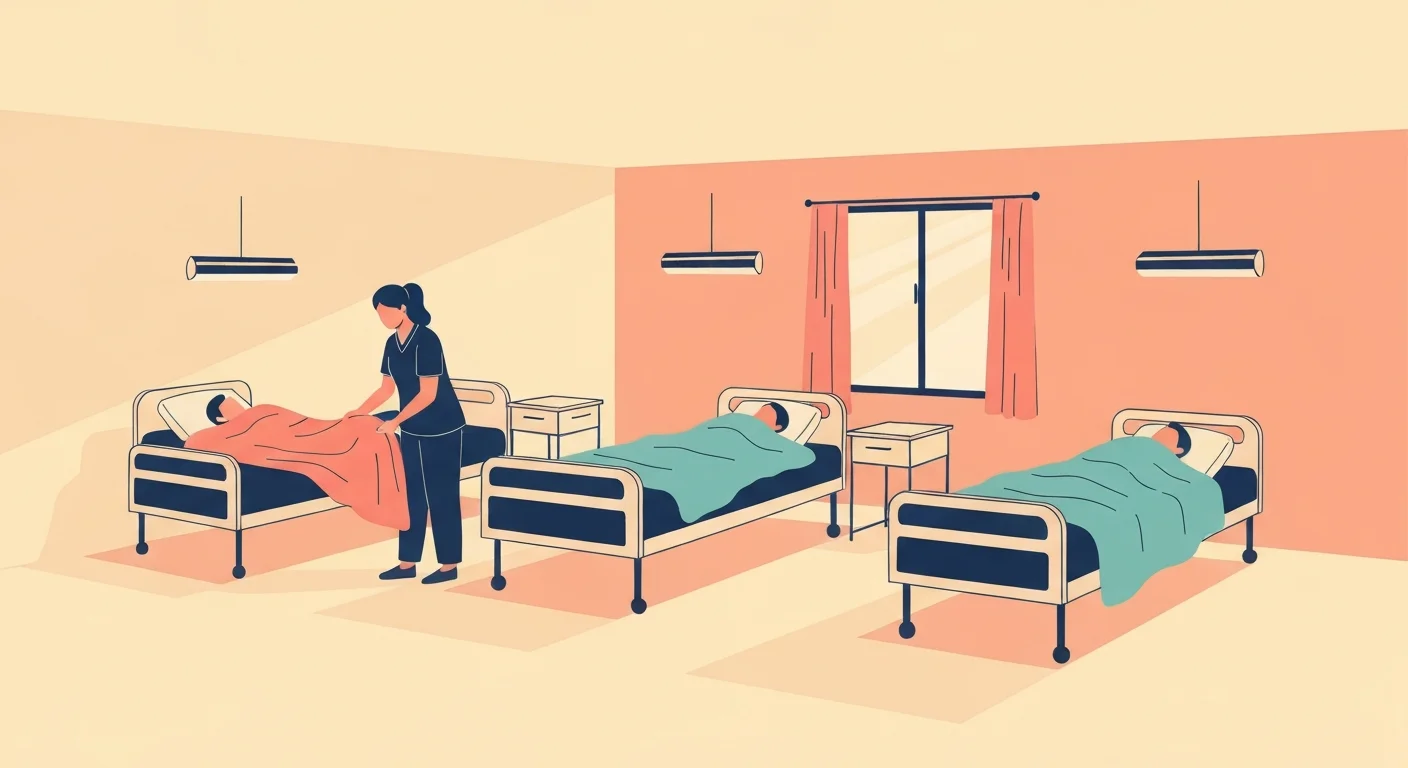
A charity ward is a shared hospital ward, a bed in a shared room with shared toilet and bath, set aside for patients who cannot pay the full cost of their care. The term "charity ward" is still what most Filipinos say, while the DOH's September 2026 Zero Balance Billing order uses "service ward" and says it means ward accommodation and not a pay ward. In everyday use, both mean a subsidized or free shared ward bed, as opposed to a private or semi-private "pay" room.
At a DOH hospital, the Department Order on Zero Balance Billing says ZBB does not require an indigency assessment, and that every patient who needs admission must be offered basic or ward accommodation. A hospital's Medical Social Service (MSS) office still assesses your paying capacity for other help, such as MAIFIP assistance and discounts at hospitals that ZBB does not cover. For the full breakdown of how that classification system works, see our hospital patient classification guide.
What Law Requires Charity Beds?
Republic Act No. 1939 requires government hospitals to keep at least 90% of their total bed capacity free or charity-classified. This is the legal foundation for why a government hospital almost always has far more ward beds than private or pay rooms — the law was written specifically to make sure poor patients have somewhere to go.
This 90% requirement applies to government hospitals. It's the reason DOH-retained hospitals can absorb large volumes of indigent and low-income patients: the bed allocation is mandated, not discretionary. If you're weighing which type of facility to go to when money is tight, a government hospital's structural bias toward free beds is a major factor — see our overview on what to do when you can't pay a hospital bill for how this fits with other relief options.
Do Private Hospitals Have Charity Wards Too?
Yes — private hospitals are also required to allocate charity beds, under DOH Administrative Order 2007-0041. Under the Universal Health Care Act (RA 11223, Sec. 29(c)), private hospitals must operate at least 10% of their bed capacity as basic/ward accommodation, compared with at least 90% for government hospitals and at least 70% for specialty hospitals. Because 10% is only a minimum, a ward bed may not be open when you need one, so confirm directly with the hospital's social service or admitting office.
What is confirmed: some of the country's largest private hospitals run charity operations on top of this requirement. St. Luke's Medical Center opened the 40-bed Evelyn D. Ang Charity Ward, which St. Luke's says provides fully subsidized care for indigent patients alongside its full-paying services. If you're at a private hospital and worried about cost, it's worth asking directly whether a charity or service ward option exists — don't assume a private hospital only has pay rooms.
What Do You Trade Off for a Free Bed?
A service ward bed comes with real trade-offs. Understanding them upfront helps you decide whether to accept one or explore other routes first.
| What you give up | What you gain |
|---|---|
| Shared room | Bill is heavily subsidized or fully waived once classified indigent |
| No choice of physician — you're assigned resident/staff doctors | Access to the same hospital, same equipment, same procedures as pay patients |
| Less privacy, shared bathroom/common area | In DOH-hospital wards, covered services come to ₱0 under Zero Balance Billing |
| Visiting hours and ward rules tend to be stricter | Full course of treatment still proceeds — classification doesn't limit what care you receive |
The core trade is privacy and choice of doctor in exchange for cost. Medically, the DOH's Zero Balance Billing order covers medically necessary inpatient services including medicines, laboratory and diagnostic services, and surgical procedures, and requires hospitals to apply it without discrimination based on socioeconomic status. The difference is the room and who is assigned to your case.
How Does Admission Work, Step by Step?
- Go to the ER or admitting section and state that you want to be admitted to a service/ward bed, not a private or semi-private room. DOH's Zero Balance Billing order says every patient who needs admission to a DOH hospital must be offered basic or ward accommodation.
- Ask to be referred to the Medical Social Service (MSS) office. All DOH-retained government hospitals have one; large private hospitals like St. Luke's have an equivalent office for charity cases.
- Bring a valid ID. Zero Balance Billing does not require extra documents beyond those needed for admission and PhilHealth verification, and a PhilHealth ID card is not required. For assistance such as MAIFIP, the hospital's social worker may ask for a barangay certificate of indigency or a 4Ps ID.
- A medical social worker interviews you and assesses your paying capacity, assigning you a patient class. The class matters for discounts and assistance outside Zero Balance Billing.
- Once classified, your bill reflects that class, and at a DOH hospital the ward bed itself already falls under Zero Balance Billing. See our patient classification guide for exactly how the class system works and what documents each class needs.
How Does Zero Balance Billing Fit In?
If you are admitted to a service ward (basic or ward bed) at a DOH hospital, you should not owe anything for covered services, regardless of your income or classification. Zero Balance Billing (ZBB) is set out in DOH Department Order 2026-0443, dated September 18, 2026, which says it applies to all Filipinos admitted in basic or ward accommodation. It covers medically necessary inpatient services, including medicines, supplies, laboratory and diagnostic services, professional services, surgical procedures, and critical care, and no additional professional fee may be collected for a covered service. The order applies to DOH hospitals, including GOCC hospitals, and to service wards only, not pay wards. ZBB is a separate mechanism from MSS classification: classification still matters where ZBB does not apply, such as private hospitals, and for assistance like MAIFIP. If a hospital charges you for a covered service, the order names the PhilHealth Action Center, at (02) 8662-2588, as a repository for ZBB-related complaints and feedback. For the full mechanics, including what's excluded, read our Zero Balance Billing guide.
What If You Can't Pay and Want to Leave?
Even in a charity or service ward, unpaid balances can still happen — for supplies not covered, or if your classification doesn't waive the full amount. Republic Act 9439 bars hospitals from detaining patients over an unpaid bill, but patients who stayed in private rooms are not covered by the law. If you've recovered and want to be discharged but still owe money, you can leave by signing a promissory note covering the balance, secured by a mortgage or a co-maker who is jointly and severally liable. Hospitals cannot legally hold you or withhold your discharge papers and medical certificate to force payment. For the full process, including what happens if a hospital refuses to let you go, see our hospital detention and unpaid bill guide and our promissory note guide.
Frequently Asked Questions
What's the difference between a charity ward and a service ward?
In everyday use, nothing: both describe a shared ward bed, as opposed to a private or semi-private pay room. "Charity ward" is the older, still commonly used term, and the DOH's 2026 Zero Balance Billing order uses "service ward." Legally, "charity bed" in DOH AO 2007-0041 means a bed for indigent or Class C and D patients, while RA 11223 defines basic or ward accommodation by what it provides.
Can I just ask for a charity ward bed, or do I need to qualify?
You can ask for a service/ward bed at admission. At a DOH hospital, the Zero Balance Billing order says ZBB does not require an indigency assessment, so you do not have to qualify first. Hospitals outside ZBB, such as private hospitals, may still bill you based on MSS classification, so ask the billing office.
Do private hospitals have charity wards?
Yes. DOH Administrative Order 2007-0041 requires private hospitals to allocate charity beds. Under RA 11223 (the UHC Act), private hospitals must operate at least 10% of their beds as basic/ward accommodation (government hospitals 90%, specialty hospitals 70%), so ask the hospital directly whether a bed is available. St. Luke's Medical Center, which opened a 40-bed charity ward, is an example of a private hospital with a charity program.
Will I get the same treatment as a paying patient in a charity ward?
Under DOH Department Order 2026-0443, ZBB covers medically necessary inpatient services including surgery, medicines and diagnostics, and must be applied without discrimination based on socioeconomic status. What differs is your room, your privacy, and which doctors are assigned to you.
Can I choose my own doctor in a charity ward?
No. Service ward patients are typically assigned resident or staff physicians rather than choosing their own attending doctor, which is one of the main trade-offs versus a private or semi-private room.
How much of the government hospital's beds are charity beds?
By law (RA 1939), government hospitals must keep at least 90% of total bed capacity free or charity-classified. This is why government hospitals generally have far more ward beds available than private or pay rooms.
Can I be detained in a charity ward if I still owe money?
No. RA 9439 bars hospitals from detaining patients over an unpaid bill. The only exception is patients who stayed in private rooms, so it covers charity ward patients. If you owe a balance you can't clear, you can be discharged after signing a promissory note secured by a mortgage or co-maker.
Does PhilHealth cover charity ward stays?
PhilHealth's case rate applies regardless of ward type. If you are in a service ward at a DOH hospital, Zero Balance Billing means covered services should come to ₱0, and you do not need to be classified first.
Conclusion
A service (charity) ward bed is one of the most direct ways to get real hospital care in the Philippines without a full bill at the end — the trade-off is privacy and choice of doctor, not quality of treatment. Start by asking for a ward bed at admission and a referral to Medical Social Service. These related guides cover the rest of the picture:
- Can't pay your hospital bill? Start here — the full overview of every relief option
- Hospital patient classification guide — how Class A–D classification and discounts work
- Zero Balance Billing guide — how ward patients at DOH hospitals can pay ₱0
- Hospital detention and unpaid bill guide — your rights if you still owe money at discharge
- Hospital bill promissory note guide — how to leave without paying in full
You can also search ClinicFinderPH for a hospital near you, or browse hospitals by location to find a government facility with service ward beds.
Need a government hospital right now? Find hospitals near you — sorted by distance, with directions and contact details.