Malasakit Centers 2026: How to Get Help With Your Hospital Bill
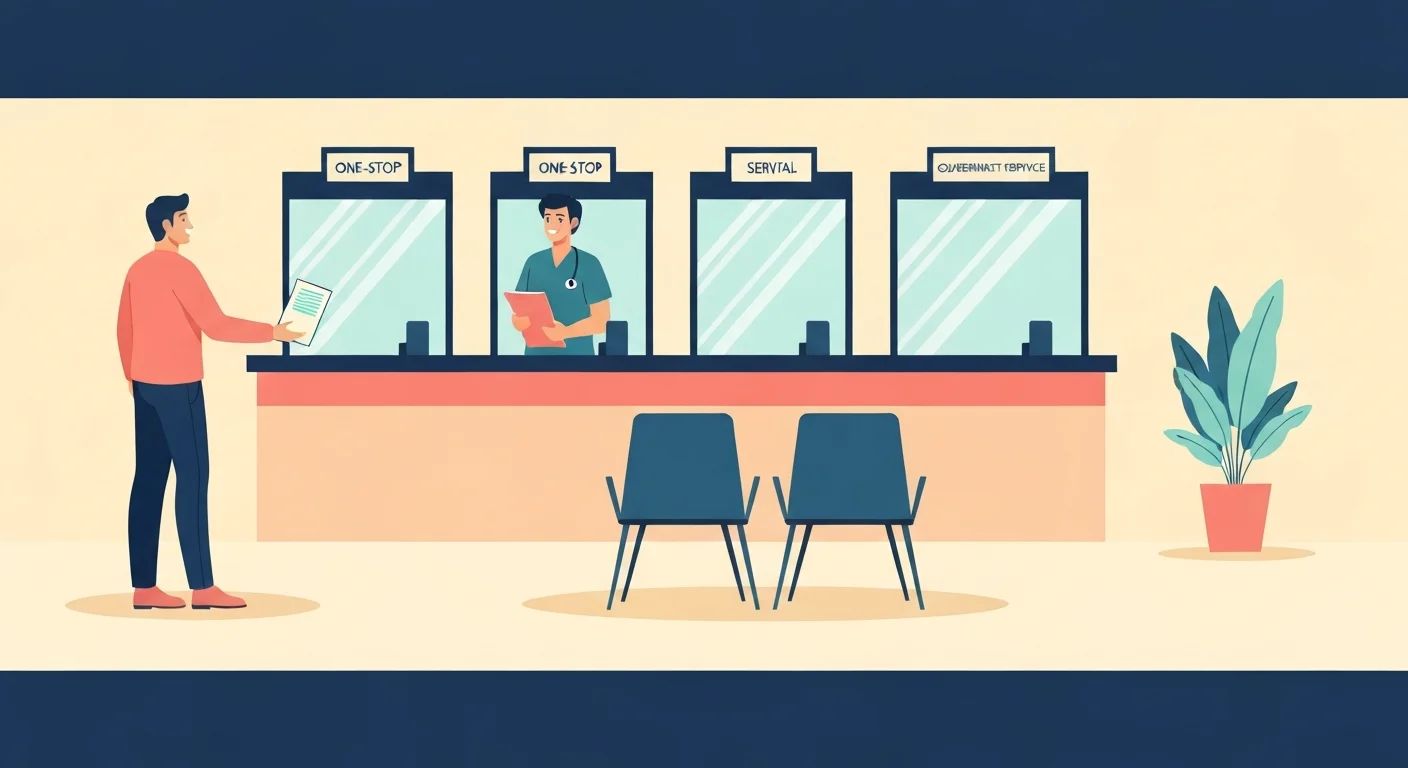
Quick Answer: A Malasakit Center is a one-stop government office inside DOH-retained hospitals, the PGH, and some LGU and other public hospitals, created under RA 11463, where PhilHealth, PCSO, DSWD, and DOH desks work together under one roof to cut your hospital bill. Walk in, and the hospital's medical social worker interviews you on the standard Unified Intake Sheet and issues a Certificate of Eligibility. PhilHealth is charged first, and the PCSO, DOH, and DSWD desks then recommend help for whatever balance remains. DSWD can release up to ₱10,000 as cash the same day, and other aid goes out as a Guarantee Letter or claim slip addressed to the hospital. A DOH regional office has reported the 166th center in the country, and news reports in November 2025 said DOH assured the Senate that all of them would keep operating through 2026.
This guide is part of our hospital bill assistance hub — start there if you need the full picture of every program available, from PhilHealth to LGU aid.
Malasakit Center 2026: Paano Bawasan ang Hospital Bill Mo
Mag-subscribe sa YouTubeTable of Contents
- What is a Malasakit Center? (RA 11463)
- Who are the four agencies inside a Malasakit Center, and what does each desk do?
- How many Malasakit Centers are there, and where?
- How do you apply at a Malasakit Center, step by step?
- What documents do you need to bring?
- How much can you get: cash vs. guarantee letter
- What if your hospital doesn't have a Malasakit Center?
- Do you still need a guarantee letter from your congressman or mayor in 2026?
- Frequently Asked Questions
- Conclusion
What is a Malasakit Center? (RA 11463)
A Malasakit Center is a single physical desk, located inside a government hospital, where the four agencies that fund medical assistance in the Philippines work side by side instead of sending you to four different offices. It was created by the Malasakit Center Act (RA 11463), signed December 3, 2019, which mandates a Malasakit Center in every DOH-retained hospital and in the Philippine General Hospital (PGH). LGU, state university, and other public hospitals may also set one up.
Before RA 11463, a patient who needed help with a hospital bill had to travel separately to PCSO, DSWD, and DOH offices, each with its own forms and queue. The law's purpose is to collapse that into one visit: you walk into the hospital's Malasakit Center desk, and a social worker there coordinates your case across all four agencies in a single process. The Center does not replace PhilHealth, PCSO, DSWD, or DOH assistance — it is the coordination point where all four converge for hospital patients specifically.
Who are the four agencies inside a Malasakit Center, and what does each desk do?
The four agencies inside every Malasakit Center are the Department of Health (DOH), the Department of Social Welfare and Development (DSWD), the Philippine Charity Sweepstakes Office (PCSO), and PhilHealth — required by RA 11463 (Sec. 8) to have a representative in every center. Their joint operating rules are in Joint Administrative Order 2020-0001, dated December 15, 2020.
| Desk | What it does |
|---|---|
| PhilHealth | Helps you register or confirm your membership (every Filipino is automatically covered under RA 11223) and gives you information on your PhilHealth benefits. By law, the PhilHealth representative assists you in availing of your benefits. PhilHealth is charged first on your bill, after any senior or PWD discount. |
| DSWD | Runs Assistance to Individuals in Crisis Situations (AICS) — medical aid released as cash (small amounts) or a Guarantee Letter (larger amounts) after a social worker assessment. See our DSWD AICS guide for the full process. |
| PCSO | Runs the Medical Assistance Program (MAP), often still called IMAP. It issues a Guarantee Letter or claim slip addressed to the hospital or pharmacy, for an amount assessed case by case. Details in our PCSO medical assistance guide. |
| DOH | Administers the Medical Assistance for Indigent and Financially Incapacitated Patients fund (MAIFIP) through its Malasakit Program Office (MPO). In DOH's order of charging, MAIFIP comes after PhilHealth, any HMO, and other DOH programs, and regular ward costs are not ordinarily charged to it. Zero Balance Billing at DOH hospitals does not depend on MAIFIP. See our DOH MAIFIP guide. |
How many Malasakit Centers are there, and where?
A DOH regional office has reported the 166th Malasakit Center in the country (Kalinga Provincial Hospital), so there are at least that many. We found no official 2026 count or regional breakdown. PCSO's last published nationwide list, dated November 2, 2022, names 152 hospitals (86 in Luzon, 29 in Visayas, 37 in Mindanao). Confirm with the specific hospital if it's not listed.
Malasakit Centers sit inside DOH-retained hospitals, the PGH, and some LGU and other public hospitals (RA 11463), and a Malasakit Center is not a standalone office. To find one, check with the government hospital nearest you, or use ClinicFinderPH's search to locate hospitals in your area and confirm which ones operate a Malasakit desk.
How do you apply at a Malasakit Center, step by step?
You apply by walking into the hospital's Malasakit Center desk — there is no appointment system or online portal for the walk-in process itself. Here's the sequence:
- Go to the Malasakit Center desk inside the hospital where you (or your family member) are admitted or seeking treatment. No prior booking is needed, since neither RA 11463 nor its joint operating order requires an appointment. Seniors and PWDs have a special lane (RA 11463, Sec. 6).
- Be interviewed by the medical social worker. The worker fills out the Unified Intake Sheet, the standard form all four agencies use (Joint Administrative Order 2020-0001), so you don't repeat your story at each desk.
- Get your Certificate of Eligibility. The social worker assesses your case using the Unified Intake Sheet and the DOH patient classification policy, then issues a Certificate of Eligibility, the document you need to get services at the Malasakit Center. Only you or a family representative can take part in the interview.
- PhilHealth comes first on your bill. If you're not sure you're a member, the PhilHealth desk helps you register or verify your membership (every Filipino is automatically covered under RA 11223). Your PhilHealth benefit is then deducted from the bill, after any senior or PWD discount.
- Whatever balance remains is routed across the DOH (MAIFIP), PCSO (MAP), and DSWD (AICS) desks, depending on your case and the amount needed.
- Each agency's representative assesses your case and recommends the type and amount of aid, and the social worker approves it. DSWD can release up to ₱10,000 as cash, and the other aid goes out as a Guarantee Letter (GL) or claim slip addressed to the hospital.
- The hospital billing office applies the cash/GL against your Statement of Account, reducing what you owe out of pocket.
What documents do you need to bring?
The exact list depends on which desks your case is routed to, but bring everything below to avoid a second trip.
| Document | Needed for | Notes |
|---|---|---|
| Valid government ID | All desks | |
| Clinical Abstract or Medical Certificate | All desks | Signed by the attending physician, showing their PRC license number; DSWD requires it issued within the last 3 months |
| Hospital bill, billing statement, or quotation | All desks | |
| Prescription or lab/diagnostic request | DSWD | If applicable to your case |
| Barangay Certificate of Indigency | DOH MAIFIP; some other desks | Not on DSWD's or PCSO's published checklists; DOH AO 2026-0031 accepts it for MAIFIP as an alternative to a social case summary or 4Ps ID |
| Social Case Study Report | DSWD | DSWD's FAQ requires it for ₱10,000 and above, and its Citizen's Charter lists it for hospital-bill and medicine assistance; PCSO's published list does not include one. Prepared by a social worker |
| PCSO MAP Application Form | PCSO | |
| Authorization Letter | DSWD | Only if a representative is filing for the patient; not required if the representative is an immediate family member |
| Referral Letter | DSWD | If applicable to your case |
How much can you get: cash vs. guarantee letter
How much you receive depends on which agency assesses your case — there is no single fixed amount for "Malasakit Center assistance" because it's really three separate agency funds working together.
| Agency | Cash | Guarantee Letter (GL) |
|---|---|---|
| DSWD (AICS) | Up to ₱10,000, may be released as cash | Larger amounts are issued as a GL addressed to the hospital or pharmacy. DSWD says a GL can cover up to ₱150,000, and grave cases may receive more. |
| PCSO (MAP) | Not released as cash | GL or claim slip addressed to the hospital or pharmacy, with the amount assessed case by case. PCSO publishes no fixed peso ceiling or percentage, so confirm the amount at the desk. |
| DOH (MAIFIP) | Not released as cash to the patient | Assessed by the hospital's Evaluating Officer and applied to your bill for eligible costs left after PhilHealth, any HMO, and other DOH programs. Approval limits are set in DOH AO 2026-0031. |
In practice, the usual sequence is that PhilHealth's case rate reduces the bill first, then the PCSO, DSWD, and DOH desks can close part or all of the remaining gap, depending on the social worker's assessment. At DOH hospitals, ward patients are covered by Zero Balance Billing, which does not depend on MAIFIP.
What if your hospital doesn't have a Malasakit Center?
If your hospital has no Malasakit Center, apply directly at the nearest PCSO or DSWD field office instead of going through the hospital desk. Each agency gives its own aid there (PCSO medical assistance and DSWD AICS), while PhilHealth benefits and DOH MAIFIP are processed through your hospital. You can also apply to PCSO online through its Online MAP portal. The same core documents apply: bring your clinical abstract, hospital bill, and valid ID regardless of which office you approach.
If your hospital is a private facility, its Malasakit-linked options are more limited. RA 11463 lets financially incapacitated patients in private facilities seek help subject to a medical social worker's assessment, so ask its medical social service office about routing you to DSWD or PCSO. Zero Balance Billing is a program of DOH hospitals, while MAIFIP can also be used at other government hospitals and at private facilities with a DOH agreement.
Do you still need a guarantee letter from your congressman or mayor in 2026?
No, not for Zero Balance Billing or MAIFIP. Section 19 of the 2026 General Appropriations Act (RA 12314), the "anti-epal" provision, bars elected officials, candidates, politicians, and their representatives from influencing, being present in, or taking part in the actual distribution of cash assistance and other financial aid, and it names MAIFIP among the covered programs. It does not mention guarantee letters. At a January 7, 2026 Palace briefing, then Health Secretary Teodoro Herbosa said the DOH does not use guarantee letters, except for private hospitals it has an agreement with. DOH's Malasakit Program Office administers MAIFIP under Administrative Order 2026-0031 (Feb 25, 2026), which repeals the earlier AO 2025-0011. The order itself says nothing about politicians or guarantee letters, and its required-documents list has no politician's letter.
The Senate's own portal, Senate Assist (assist.senate.gov.ph), still takes medical assistance requests, says the help is given as a Guarantee Letter to the hospital, and says the letter can be used until December 31 of the year it is issued. Read our guide to guarantee letters for more on how GLs work and what the 2026 rule says. If a hospital or local office tells you a lawmaker's endorsement is still required, ask to see the rule. The Malasakit Center desk itself does not require one.
News reports in November 2025 said DOH assured the Senate that all Malasakit Centers would operate without interruption through 2026, after reports of funding cuts.
Frequently Asked Questions
Ano ang Malasakit Center?
Isang one-stop desk sa loob ng ospital ng gobyerno (DOH-retained, PGH, at ilang LGU at iba pang pampublikong ospital) kung saan magkasamang naglilingkod ang PhilHealth, PCSO, DSWD, at DOH para tulungan kang bayaran ang iyong ospital bill. Nilikha ito sa ilalim ng RA 11463 (Malasakit Center Act), at wala kang kailangang appointment — pumunta ka lang sa desk ng ospital.
Sino ang pwedeng mag-apply sa Malasakit Center?
Para ito sa indigent at financially incapacitated na pasyente, PhilHealth member man o hindi. Ang social worker ang susuri sa bawat kaso at magpapasya kung anong tulong ang angkop.
Do I need to already be a PhilHealth member to get help?
No. Everyone is automatically covered under RA 11223. If you're not sure of your membership, the PhilHealth desk inside the Malasakit Center can help you register or verify it as part of the routing process, before your case moves to the PCSO, DOH, or DSWD desks.
Magkano ang matatanggap ko sa Malasakit Center?
Walang iisang fixed amount, dahil depende ito sa agency na susuri sa iyong kaso. Hanggang ₱10,000 ang maaaring ibigay na cash ng DSWD; mas malaking halaga ay ibinibigay bilang Guarantee Letter na naka-address sa ospital, mula sa DSWD o PCSO. Ang DOH MAIFIP naman ay sinusuri ng Evaluating Officer ng ospital at inilalapat sa bill mo.
Do I need a letter from my congressman or mayor to get help at a Malasakit Center?
No. Section 19 of the 2026 GAA (RA 12314) bars elected officials from taking part in the actual distribution of aid in programs like MAIFIP, and the Malasakit Center desk does not require a politician's letter. Some offices outside the Center, like the Senate's Senate Assist portal, still offer their own Guarantee Letter service.
Paano kung walang Malasakit Center ang hospital ko?
Pumunta sa pinakamalapit na PCSO o DSWD field office sa halip na sa ospital desk. Bawat ahensya ay nagbibigay ng sarili nilang tulong doon, habang ang PhilHealth at DOH MAIFIP ay dumadaan sa ospital mo. May online application din ang PCSO (Online MAP). Dalhin pa rin ang parehong mga dokumento, clinical abstract, hospital bill, at valid ID.
Is Malasakit Center assistance guaranteed to cover my entire bill?
Not necessarily. It works alongside your PhilHealth case rate and any HMO you have, and the amount from PCSO, DSWD, or DOH MAIFIP depends on the social worker's assessment of your specific case. At DOH hospitals, ward patients are covered by Zero Balance Billing (DOH Department Order 2026-0443), which does not depend on MAIFIP, but private-room admissions and private hospitals are not automatically covered the same way.
Conclusion
A Malasakit Center exists to save you from running between four separate government offices while you're worried about a hospital bill — one desk, one intake sheet, and a social worker who routes your case for you. For the full landscape of programs beyond Malasakit, start at our hospital bill assistance hub, or go deeper on the individual agencies with our DSWD AICS guide, PCSO medical assistance guide, and DOH MAIFIP guide. If you're trying to understand what a ₱0 ward bill actually means, see our explainer on Zero Balance Billing. And if you need to find a hospital with a Malasakit Center near you, use ClinicFinderPH's search or browse hospitals by location.
Need a government hospital right now? Find hospitals near you — sorted by distance, with directions and contact details.