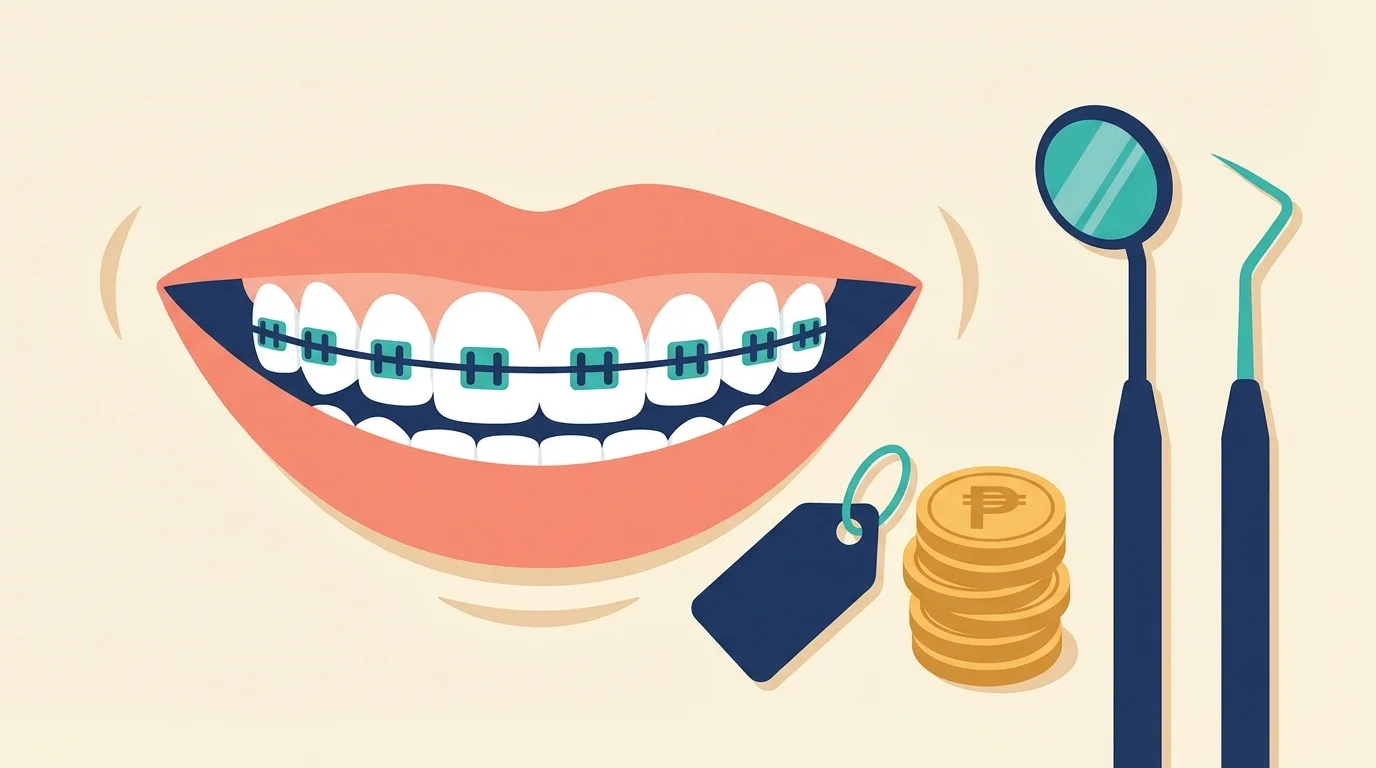
Braces Price in the Philippines 2026: Complete Cost Guide
Quick Answer: Braces in the Philippines cost between ₱30,000 and ₱300,000 depending on the type. Metal braces: ₱30,000-80,000. Ceramic braces: ₱50,000-140,000. Self-ligating (Damon): ₱90,000-150,000. Lingual braces: ₱80,000-200,000. Invisalign: ₱170,000-300,000. Most prices include installation, monthly adjustments, and retainers.
Table of Contents
- Braces Price Comparison Table
- Types of Braces and Detailed Costs
- What's Included in Braces Cost?
- What Affects Braces Cost?
- Payment Options for Braces
- Braces vs. Invisalign: Which Should You Choose?
- Where to Get Braces in the Philippines
- FAQs
Introduction
Getting braces is one of the biggest dental investments you'll make. In the Philippines, the cost varies significantly based on the type of braces, the clinic, and the complexity of your case.
Whether you're considering traditional metal braces for their affordability or Invisalign for a discreet option, understanding the full cost breakdown helps you budget effectively and avoid surprises.
This guide covers the current 2026 prices for all types of braces in the Philippines, what factors affect cost, and how to find affordable payment options. Budgeting for other treatments too? Our full guide to dental costs in the Philippines compares prices across every common procedure.
Braces Price Comparison Table
Here's a quick comparison of all braces types available in the Philippines in 2026:
| Type | Price Range | Treatment Duration | Best For |
|---|---|---|---|
| Traditional Metal Braces | ₱30,000 - ₱80,000 | 18-24 months | Most cases, budget-conscious patients |
| Ceramic (Clear) Braces | ₱50,000 - ₱140,000 | 18-24 months | Adults wanting less visible braces |
| Self-Ligating (Damon) | ₱90,000 - ₱150,000 | 12-20 months | Faster treatment, fewer adjustments |
| Lingual Braces | ₱80,000 - ₱200,000 | 18-30 months | Complete invisibility from the front |
| Invisalign (Clear Aligners) | ₱170,000 - ₱300,000 | 12-18 months | Mild to moderate cases, professionals |
Note: Prices vary by clinic location, orthodontist experience, and case complexity. Metro Manila clinics typically charge 10-30% more than clinics in Cebu, Davao, or other cities.
Types of Braces and Detailed Costs
Traditional Metal Braces (Metallic Braces)
Cost: ₱30,000 - ₱80,000
Metal braces (also called metallic braces) are the most common and most affordable type of orthodontic treatment in the Philippines. They use stainless steel brackets bonded to each tooth, connected by a metal wire that gradually moves your teeth into alignment.
Price breakdown:
- Down payment: ₱15,000 - ₱40,000 (typically 50% of total)
- Monthly adjustment: ₱500 - ₱2,000 per visit
- Total treatment cost: ₱30,000 - ₱80,000
Pros:
- Most affordable option
- Effective for all types of misalignment, including severe cases
- Durable and reliable
- Shorter treatment time compared to some alternatives
Cons:
- Most visible option
- Can cause discomfort after adjustments
- Food restrictions (hard, sticky foods)
- Requires careful cleaning around brackets
Best for: Students, budget-conscious patients, and anyone with moderate to severe alignment issues. Metal braces are the workhorse of orthodontics and can handle virtually any case.
Ceramic (Clear) Braces
Cost: ₱50,000 - ₱140,000
Ceramic braces work the same way as metal braces but use tooth-colored or clear brackets instead of metal ones. The wire can also be tooth-colored, making them significantly less noticeable.
Price breakdown:
- Down payment: ₱25,000 - ₱70,000
- Monthly adjustment: ₱800 - ₱2,500 per visit
- Total treatment cost: ₱50,000 - ₱140,000
Pros:
- Much less visible than metal braces
- Same effectiveness as metal braces for most cases
- Available at most orthodontic clinics
Cons:
- More expensive than metal braces
- Brackets can stain if not properly maintained
- Slightly more fragile than metal brackets
- May require slightly longer treatment time
Best for: Adults and professionals who want effective orthodontic treatment without the metallic look. Popular among working professionals in their 20s and 30s.
Self-Ligating Braces (Damon System)
Cost: ₱90,000 - ₱150,000
Self-ligating braces use a specialized clip mechanism instead of elastic bands (ligatures) to hold the wire in place. The Damon System is the most well-known brand. This design reduces friction and often results in faster tooth movement.
Price breakdown:
- Down payment: ₱45,000 - ₱75,000
- Monthly adjustment: ₱1,000 - ₱3,000 per visit
- Total treatment cost: ₱90,000 - ₱150,000
Pros:
- Potentially faster treatment time (12-20 months)
- Fewer adjustment visits needed
- Less discomfort during treatment
- Easier to clean than traditional braces
- Available in metal or clear versions
Cons:
- Significantly more expensive than traditional braces
- Not all orthodontists offer this system
- Clear Damon brackets cost more than metal versions
Best for: Patients who want a faster treatment timeline and are willing to invest more. Also good for those who find frequent clinic visits inconvenient, as Damon braces require fewer adjustments.
Lingual Braces
Cost: ₱80,000 - ₱200,000
Lingual braces are attached to the back (tongue side) of your teeth instead of the front. This makes them completely invisible from the outside. They use the same bracket-and-wire system as traditional braces but placed on the inner surfaces.
Price breakdown:
- Down payment: ₱40,000 - ₱100,000
- Monthly adjustment: ₱1,500 - ₱3,500 per visit
- Total treatment cost: ₱80,000 - ₱200,000
Pros:
- Completely invisible from the front
- Effective for most alignment issues
- No aesthetic impact on your smile during treatment
Cons:
- More expensive due to custom fitting
- Can affect speech initially (tongue touches brackets)
- More difficult to clean
- Not all orthodontists are trained in this technique
- May cause more tongue irritation
Best for: Patients who absolutely cannot have visible braces (public speakers, media professionals, etc.) and are willing to pay the premium for complete invisibility.
Clear Aligners (Invisalign)
Cost: ₱170,000 - ₱300,000
Invisalign and similar clear aligner systems use a series of custom-made, removable clear plastic trays that gradually shift your teeth. You wear each set of aligners for about two weeks before switching to the next set.
Price breakdown:
- Initial cost: Usually paid in installments
- Full treatment: ₱170,000 - ₱300,000
- Includes all aligners, refinement trays, and retainers at most clinics
Pros:
- Nearly invisible when worn
- Removable for eating and brushing
- No food restrictions
- Fewer emergency visits (no broken brackets or wires)
- More comfortable than wire-based braces
Cons:
- Most expensive option
- Not suitable for severe or complex cases
- Requires discipline (must wear 22 hours/day)
- Can be lost or damaged
- Limited availability of certified providers
Best for: Adults with mild to moderate alignment issues who prioritize aesthetics and convenience. Popular among professionals who frequently attend meetings or social events.
What's Included in Braces Cost?
Most orthodontic clinics in the Philippines offer "all-in" or "package" pricing that covers the entire treatment. Here's what a typical braces package includes:
- Initial consultation and assessment — Examination of your teeth and bite
- Diagnostic records — X-rays (panoramic and/or cephalometric), dental impressions or digital scans, photographs
- Treatment planning — Your personalized orthodontic plan
- Braces installation — Bonding of brackets and wire placement
- Monthly adjustments — Regular visits (every 3-6 weeks) for wire changes and adjustments
- Emergency repairs — Broken brackets or loose wires during treatment
- Braces removal — Debonding brackets and cleaning adhesive from teeth
- Retainers — Both fixed (permanent wire) and removable retainers to maintain results
What may cost extra:
- Pre-treatment procedures (extractions, fillings) — ₱500-3,000 per tooth
- Additional X-rays or scans beyond initial records
- Replacement retainers if lost or broken — ₱3,000-10,000
- Temporary anchorage devices (TADs) for complex cases — ₱5,000-15,000 per unit
Always ask your orthodontist for a detailed breakdown of what's included before committing. Some clinics offer lower headline prices but charge separately for items that other clinics include.
What Affects Braces Cost?
Several factors determine how much you'll pay for braces:
Clinic Location
Clinics in Metro Manila (especially Makati, BGC, Ortigas) charge the highest rates. Expect to pay 10-30% more than clinics in Cebu, Davao, or provincial areas. However, don't choose a clinic based on price alone — the quality of your orthodontist matters more.
Orthodontist Experience and Credentials
Board-certified orthodontists (members of the Philippine Association of Orthodontists) typically charge more than general dentists who offer braces. This premium is justified — orthodontists complete 2-3 years of specialized training beyond dental school. For the best results, always choose a qualified orthodontist over a general dentist.
Case Complexity
Simple cases (minor crowding, slight gaps) cost less than complex cases (severe misalignment, crossbite, overbite/underbite). Complex cases require longer treatment time, more adjustments, and sometimes additional procedures like tooth extraction or jaw surgery.
Treatment Duration
Longer treatment means more adjustment visits and more materials used. A case that takes 30 months will cost more than one that takes 18 months. The type of braces also affects duration — self-ligating and Invisalign may be faster for certain cases.
Brand and Materials
Premium brands like Damon (for self-ligating) and Invisalign (for clear aligners) command higher prices due to their proprietary technology and brand premium. Generic metal braces are the most affordable because the materials are widely available.
Package Inclusions
Some clinics offer all-inclusive packages while others charge separately for consultations, X-rays, retainers, and repairs. Compare the total cost, not just the headline price. An "expensive" all-inclusive package may be cheaper than a "budget" package with add-on fees.
Payment Options for Braces
Braces are a significant investment, but there are several ways to manage the cost:
Installment Plans
Most orthodontic clinics in the Philippines offer installment plans, making braces accessible even on a tight budget:
- Down payment: Typically 30-50% of the total cost
- Monthly installments: The remaining balance spread over the treatment duration (12-24 months)
- Interest: Many clinics offer 0% interest for installment plans tied to treatment visits
For example, ₱50,000 metal braces might require a ₱25,000 down payment and 18 monthly payments of ₱1,400 (coinciding with your adjustment visits).
HMO Coverage
Some HMO plans include limited orthodontic coverage:
- Maxicare: Select plans cover ₱10,000-30,000 for orthodontics
- PhilCare: Some corporate plans include dental with orthodontic benefits
- Medicard: Limited orthodontic coverage on premium plans
HMO orthodontic coverage is typically limited and may only apply to specific clinics. Check your plan details and pre-authorize before starting treatment.
Credit Card Installments
Some clinics partner with banks for credit card installment programs (BDO, BPI, Metrobank) offering 0% interest for 3-12 months. This lets you pay the full amount upfront via credit card and repay the bank in monthly installments.
Tips for Budgeting
- Get quotes from at least 3 clinics before deciding
- Ask about all-in pricing vs. itemized costs
- Factor in transportation costs for monthly visits
- Set aside an emergency fund for unexpected dental needs during treatment
- Check if your employer offers dental benefits or reimbursement
Braces vs. Invisalign: Which Should You Choose?
This is one of the most common questions patients ask. Here's a quick decision guide:
| Factor | Braces | Invisalign |
|---|---|---|
| Cost | ₱30,000-150,000 | ₱170,000-300,000 |
| Visibility | Visible (metal) or semi-visible (ceramic) | Nearly invisible |
| Effectiveness | All cases including severe | Mild to moderate cases |
| Comfort | Initial discomfort, wire adjustments | Generally more comfortable |
| Maintenance | Harder to clean, food restrictions | Easy — remove to eat and brush |
| Discipline Required | Minimal (always on) | High (must wear 22 hrs/day) |
| Treatment Time | 18-24 months | 12-18 months |
Choose braces if: You have a complex case, want the most affordable option, or don't want to worry about removing and tracking aligners daily.
Choose Invisalign if: You have a mild to moderate case, prioritize aesthetics, want the convenience of removal, and can commit to wearing aligners 22 hours a day.
Your orthodontist can recommend the best option during your initial consultation based on your specific dental needs.
Where to Get Braces in the Philippines
Always Choose an Orthodontist
This is the single most important piece of advice: get braces from a licensed orthodontist, not a general dentist. Orthodontists undergo 2-3 years of additional specialized training in tooth and jaw alignment. While some general dentists offer braces, an orthodontist is better equipped to handle complications and deliver optimal results.
Look for members of the Philippine Association of Orthodontists (PAO) for verified credentials.
What to Look for in an Orthodontic Clinic
- Board-certified orthodontist (not just a general dentist)
- Modern diagnostic equipment (digital X-rays, 3D scanning)
- Clear pricing and transparent treatment plans
- Positive patient reviews and before/after photos
- Convenient location (you'll visit monthly for 1-2 years)
- Flexible payment options
Finding Clinics
You can browse dental clinics offering orthodontic services on ClinicFinderPH. Filter by location, price range, and services to find clinics in your area that offer braces.
In Cebu City, clinics like Affinity Dental Clinics, Align Dental Cebu, and Jolo Dental Clinic offer braces at various price points.
In Metro Manila, options include Smile More Dental Clinic, Asian Sun Dental Clinic, Elevate Dental, and numerous hospital-based orthodontic departments.
Frequently Asked Questions
What is the cheapest type of braces in the Philippines?
Traditional metal braces are the most affordable, starting at around ₱30,000 for simple cases. Clinics outside Metro Manila (Cebu, Davao, provincial areas) generally offer lower prices. However, the cheapest option isn't always the best — prioritize the quality of your orthodontist over the price of braces.
How long do braces take?
Treatment duration depends on the complexity of your case and the type of braces. Metal and ceramic braces typically take 18-24 months. Self-ligating braces may be faster at 12-20 months. Invisalign usually takes 12-18 months for suitable cases. Severe cases can take up to 30 months or longer.
Are braces covered by PhilHealth?
No, PhilHealth does not cover braces or any orthodontic treatment. PhilHealth dental benefits are limited to preventive services like cleaning, fluoride application, and emergency extraction. You'll need to pay for braces out of pocket, through an HMO plan (limited coverage), or via clinic installment plans.
Can I get braces with missing teeth?
Yes, in many cases you can get braces even with missing teeth. Your orthodontist may actually use the gap from a missing tooth as part of the treatment plan. In some cases, braces can close gaps from missing teeth, eliminating the need for implants or bridges. Your orthodontist will evaluate your specific situation during consultation.
What's the best age to get braces?
Orthodontists generally recommend an initial evaluation by age 7, with most braces treatments starting between ages 10-14 when permanent teeth have erupted. However, there's no upper age limit for braces — adult orthodontics is common and effective. Many Filipino adults in their 20s, 30s, and even 40s get braces or Invisalign.
Do braces hurt?
You'll feel pressure and mild soreness for 3-5 days after braces are installed and after each adjustment. This is normal and means the braces are working. Over-the-counter pain relievers and soft foods help manage discomfort. The pain is temporary and decreases with each adjustment as you get used to the braces.
Can I pay for braces monthly?
Yes, most orthodontic clinics in the Philippines offer monthly installment plans. You typically pay a down payment (30-50% of total cost) at the start, then monthly payments aligned with your adjustment visits. Many clinics offer 0% interest installments over the treatment duration (12-24 months).
How much is Invisalign in the Philippines?
Invisalign in the Philippines costs between ₱170,000 and ₱300,000 as of 2026. The price depends on the complexity of your case, the number of aligner trays needed, and the clinic. Some clinics offer other clear aligner brands (ClearCorrect, Zenyum) at lower price points starting around ₱80,000-120,000.
How much do upper braces only cost?
Upper braces only (single-arch treatment) typically cost 40-60% of full treatment. Metal upper braces start at ₱15,000-₱40,000, ceramic upper braces at ₱25,000-₱70,000. However, not all cases are suitable for single-arch treatment — your orthodontist needs to evaluate your bite to determine if treating only the upper teeth will create alignment or bite problems. Many orthodontists recommend full treatment for the best long-term results.
Are cheap braces safe?
Beware of extremely low-priced braces (under ₱20,000) as they may indicate unqualified providers using substandard materials. Improperly done braces can cause permanent damage to your teeth, roots, and jaw. Always verify that your provider is a licensed orthodontist and that the clinic uses quality brackets and wires from reputable manufacturers.
How do I know if I need braces?
Common signs you may benefit from braces include: crowded or overlapping teeth, noticeable gaps between teeth, overbite or underbite, crossbite, difficulty chewing or biting, jaw pain, and mouth breathing. The best way to know for sure is to schedule an orthodontic consultation. Most clinics offer free or low-cost initial assessments.
Conclusion
Braces are a significant but worthwhile investment in your dental health and confidence. With prices ranging from ₱30,000 for metal braces to ₱300,000 for Invisalign, there's an option for most budgets in the Philippines.
The most important factor isn't the type of braces or the price — it's the skill of your orthodontist. Always choose a board-certified orthodontist, get multiple consultations, and understand the full cost breakdown before committing.
For Damon and self-ligating braces costs, see our dedicated Damon Braces Price Philippines guide.
Ready to start your orthodontic journey? Find dental clinics with orthodontic services on ClinicFinderPH to compare prices, read reviews, and book a consultation.