Autism Evaluation for Children in the Philippines: Complete Guide (2026)
Autism Spectrum Disorder (ASD) evaluations in the Philippines are conducted by developmental pediatricians, child neurologists, and child psychiatrists. Consultation fees range from ₱800–₱3,000 per visit, with full diagnostic assessments costing ₱5,000–₱25,000 depending on the facility. PhilHealth's Z-Benefits package covers autism-related therapies worth up to ₱20,000 per year. Children diagnosed with ASD qualify for a PWD ID, granting a 20% discount and VAT exemption on medicines, therapies, and medical services.
Early diagnosis makes a significant difference. Studies consistently show that children who receive intervention before age 3 have far better outcomes in communication, social skills, and independence. Yet many Filipino parents delay evaluation — sometimes because they don't know where to go, what it costs, or what support is available.
This guide covers everything: where to get evaluated, how much it costs, what PhilHealth and PWD benefits you can claim, and what therapy options exist nationwide.
Early Signs of Autism in Children
Every child develops differently, but certain patterns may warrant a professional evaluation. These are not diagnostic criteria — only a specialist can diagnose ASD — but they are common early indicators.
Signs in Toddlers (12–24 months)
- Does not respond to their name by 12 months
- No pointing or waving by 12 months
- No single words by 16 months or two-word phrases by 24 months
- Avoids eye contact or does not smile back
- Gets upset by minor changes in routine
- Prefers to play alone and does not engage in pretend play
- Repeats words or phrases over and over (echolalia)
- Has unusual reactions to sounds, textures, or lights
Signs in Older Children (3–5 years)
- Difficulty understanding other people's feelings
- Prefers to play alone or has trouble making friends
- Repeats actions or movements (hand-flapping, spinning, rocking)
- Unusually focused interests or attachment to specific objects
- Difficulty with back-and-forth conversation
- Resists changes in routine; needs things to be "just so"
When to Seek an Evaluation
If you notice several of these signs, don't wait — our signs of autism in toddlers guide covers the early red flags in detail. Talk to your pediatrician and ask for a referral to a developmental pediatrician. The earlier the assessment, the earlier your child can begin receiving support.
You can also take a preliminary screening using the Modified Checklist for Autism in Toddlers (M-CHAT) — ask your pediatrician about it or search for the free version online.
Who Can Diagnose Autism?
In the Philippines, three types of specialists are qualified to diagnose autism:
| Specialist | What They Do | Typical Consultation Fee |
|---|---|---|
| Developmental Pediatrician | Specializes in child development; the primary specialist for ASD diagnosis | ₱1,500–₱3,000 |
| Child Neurologist | Focuses on brain and nervous system conditions; rules out neurological causes | ₱1,000–₱2,500 |
| Child Psychiatrist | Handles behavioral and mental health; useful for co-occurring conditions like ADHD | ₱1,000–₱2,500 |
The recommended first step is a developmental pediatrician. They are trained specifically to evaluate developmental delays, administer standardized tests (ADOS-2, ADI-R, Bayley Scales), and create intervention plans.
What Happens During an Evaluation?
A typical autism evaluation involves multiple sessions:
- Initial consultation — The doctor takes a detailed developmental history from parents (milestones, behavior, family history)
- Developmental assessment — Standardized tools are used to evaluate communication, social interaction, and behavior
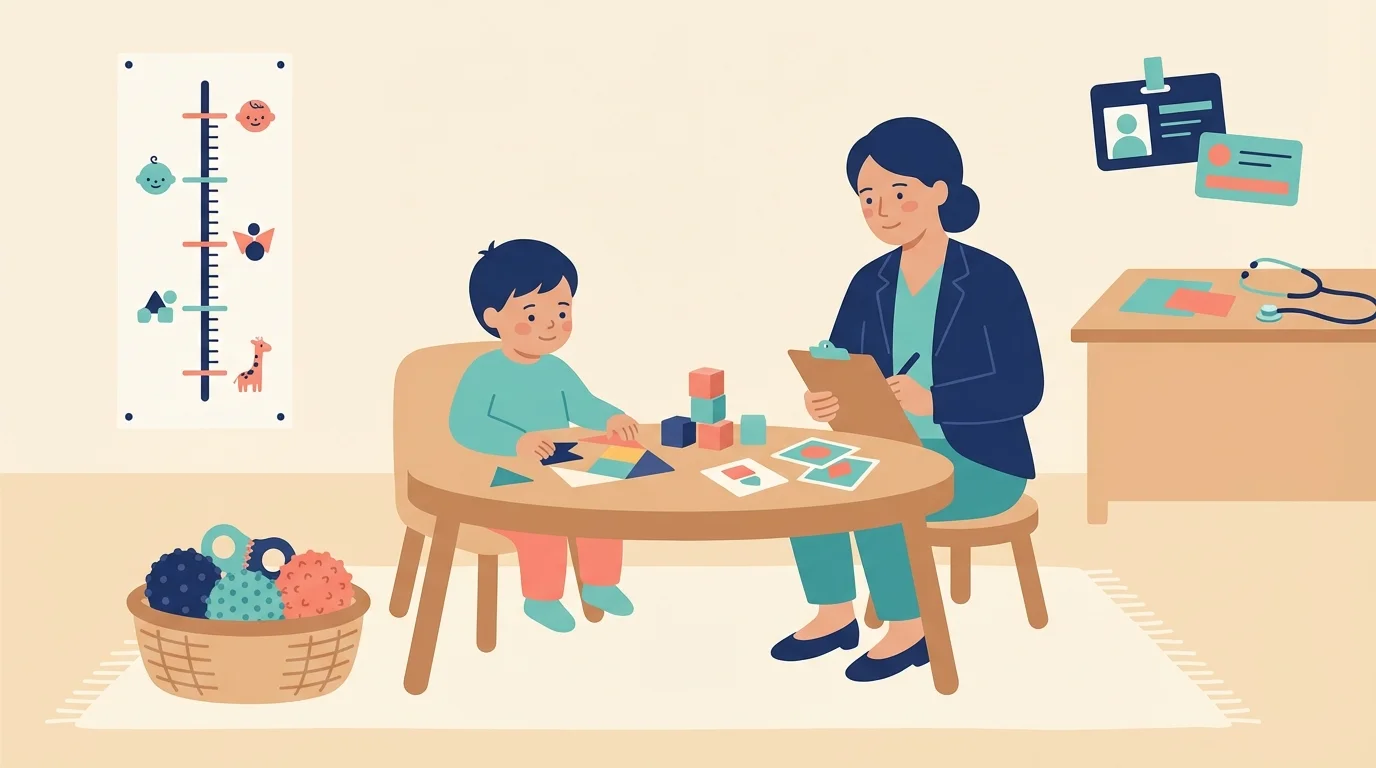
- Observation — The specialist observes how the child plays, interacts, and responds
- Additional tests — Hearing tests, EEG, or lab work may be ordered to rule out other conditions
- Diagnosis and plan — The specialist explains findings and recommends next steps (therapy, school accommodations, follow-up)
The full process typically takes 2–4 sessions over several weeks.
Where to Get Autism Evaluations
Government Hospitals (More Affordable)
These hospitals have dedicated developmental pediatrics departments and offer subsidized rates:
Metro Manila:
- Philippine Children's Medical Center (PCMC), Quezon City — the country's premier children's hospital with a full Developmental Pediatrics section. Offers comprehensive autism evaluations at subsidized rates.
- Philippine General Hospital (PGH), Manila — Child Neuroscience Center handles developmental assessments. Very affordable but expect long wait times.
- National Children's Hospital (NCH), Quezon City — government pediatric specialty hospital with developmental assessment services.
- East Avenue Medical Center, Quezon City — has a Developmental Pediatrics outpatient clinic.
Outside Metro Manila:
- Vicente Sotto Memorial Medical Center, Cebu City — the Visayas' largest government hospital with pediatric developmental services.
- Southern Philippines Medical Center (SPMC), Davao City — has a Child Development Unit offering evaluations.
- Baguio General Hospital, Baguio City — pediatric department handles developmental referrals.
- Western Visayas Medical Center, Iloilo City — offers developmental pediatric consultations.
Cost at government hospitals: ₱100–₱500 per consultation. Full evaluation including testing: ₱2,000–₱8,000. Service or charity wards may further reduce costs.
Private Hospitals and Clinics
Private facilities offer shorter wait times and more flexible scheduling:
Metro Manila:
- The Medical City, Pasig — Center for Developmental Pediatrics with comprehensive evaluation and therapy services.
- St. Luke's Medical Center, BGC and Quezon City — Neurodevelopmental Center offers multidisciplinary evaluations.
- Makati Medical Center, Makati — Developmental Pediatrics section in the Department of Pediatrics.
- Cardinal Santos Medical Center, San Juan — known for its Developmental and Behavioral Pediatrics clinic.
- Asian Hospital and Medical Center, Muntinlupa — has developmental pediatrics specialists on staff.
Outside Metro Manila:
- Cebu Doctors' University Hospital, Cebu City — developmental pediatrics outpatient services.
- Chong Hua Hospital, Cebu City — pediatric subspecialty clinic includes developmental evaluations.
- Davao Doctors Hospital, Davao City — developmental pediatrics consultations available.
- Qualimed Hospital, Clark/Iloilo — chain with pediatric subspecialists in select branches.
Cost at private hospitals: ₱1,500–₱3,000 per consultation. Full evaluation: ₱10,000–₱25,000 (includes standardized testing, multi-session assessment, and written report).
Specialized Autism and Development Centers
These centers focus specifically on developmental conditions and often combine evaluation with therapy:
- Autism Society Philippines (ASP) partner centers — ASP maintains a list of accredited professionals and centers nationwide. Visit autismsocietyphilippines.org for referrals.
- Autism Heart Foundation — offers support programs and can connect families with evaluation services.
- Child Development Centers in LGUs — some cities and municipalities operate free or subsidized developmental screening centers. Check with your local health office.
How to Find a Developmental Pediatrician Near You
Find developmental pediatricians near you on ClinicFinderPH — browse the nearest pediatric clinics by distance, then call ahead to confirm a developmental pediatrician is available. For how to choose one and what to expect, read our developmental pediatrician guide. You can also ask your child's regular pediatrician for a referral to a developmental specialist.
How Much Does an Autism Evaluation Cost?
| Component | Government Hospital | Private Hospital/Clinic |
|---|---|---|
| Initial consultation | ₱100–₱500 | ₱1,500–₱3,000 |
| Developmental testing (ADOS-2, etc.) | ₱1,500–₱5,000 | ₱5,000–₱15,000 |
| Hearing test (ABR/OAE) | ₱500–₱1,500 | ₱2,000–₱5,000 |
| EEG (if needed) | ₱1,000–₱2,000 | ₱3,000–₱6,000 |
| Written diagnostic report | Often included | ₱1,000–₱3,000 |
| Total estimate | ₱2,000–₱8,000 | ₱10,000–₱25,000 |
Important: These are estimates and vary by facility. Government hospitals are significantly cheaper but often have longer wait times (weeks to months for an appointment).
PhilHealth Coverage for Autism
PhilHealth includes autism under its Z-Benefits Package for Children with Developmental Disabilities. This is one of the most underused benefits — many families don't even know it exists.
What's Covered
The Z-Benefits package for developmental disabilities covers:
| Benefit | Coverage Amount |
|---|---|
| Comprehensive developmental assessment | Up to ₱10,000 |
| Therapy sessions (OT, Speech, Behavioral) | Up to ₱20,000/year |
| Follow-up consultations | Included in the package |
Requirements to Avail Z-Benefits
- Active PhilHealth membership (member or dependent)
- Diagnosis from a qualified specialist (developmental pediatrician, child neurologist, or child psychiatrist)
- Treatment at a PhilHealth-accredited facility with a Z-Benefits contract
- Referral from a primary care provider (through Konsulta Package or municipal health center)
How to Use Your Z-Benefits
- Get a referral from your health center or Konsulta provider
- Visit a PhilHealth-accredited hospital with a Z-Benefits package
- Present your PhilHealth ID/MDR and referral
- The hospital will handle the PhilHealth claim — you only pay amounts exceeding the package rate
Other PhilHealth Benefits That Apply
Beyond Z-Benefits, regular PhilHealth benefits can cover related services:
- Outpatient consultations via the Konsulta Package (free at accredited primary care facilities)
- Inpatient benefits if your child is hospitalized for related conditions
- Laboratory tests ordered as part of the evaluation
Check your eligibility at PhilHealth's Member Inquiry Portal or read our HMO vs PhilHealth comparison guide.
PWD ID and Benefits for Children with Autism
Children diagnosed with Autism Spectrum Disorder automatically qualify for a Person with Disability (PWD) ID under Republic Act 7277 (Magna Carta for Persons with Disabilities), as amended by RA 10754.
How to Apply for a PWD ID
Requirements:
- Medical certificate or clinical abstract from the diagnosing specialist (must state the disability)
- One valid government-issued ID of the parent/guardian
- Barangay certificate of residency
- 1x1 or 2x2 ID photo of the child
- Birth certificate of the child (PSA or local civil registrar copy)
Where to apply:
- Municipal or City Social Welfare and Development Office (MSWDO/CSWDO)
- Person with Disability Affairs Office (PDAO) of your LGU
- Some barangay halls can also process initial applications
Processing time: Usually 1–3 working days. The PWD ID is free of charge.
PWD Benefits Your Child Can Use
| Benefit | Details |
|---|---|
| 20% discount | On medicines, therapy sessions, medical consultations, hospital charges, lab tests, and professional fees |
| VAT exemption | On top of the 20% discount — effectively ~32% total savings |
| Free express lane | Priority lane access in hospitals, clinics, and government offices |
| Educational benefits | Scholarship programs and DepEd SPED school accommodations |
| PhilHealth priority | Automatic PhilHealth coverage if not yet a member/dependent |
| Tax benefits for parents | Additional ₱25,000 tax exemption for parents/guardians supporting a PWD dependent |
Where to Use PWD Discounts
The 20% discount + VAT exemption applies to:
- Medicines — all pharmacies (Mercury Drug, Watsons, TGP, Southstar, Rose Pharmacy)
- Therapy sessions — occupational therapy, speech therapy, ABA therapy, physical therapy
- Medical consultations — pediatricians, developmental pediatricians, child neurologists, psychiatrists
- Hospital charges — inpatient and outpatient services, laboratory, imaging
- Restaurants and food — up to ₱10,000 per meal per establishment per day
- Transportation — 20% discount on domestic air, sea, and land travel
Tip: Always present the PWD ID before payment. Some establishments require the PWD booklet in addition to the ID card.
Therapy Options for Children with Autism
After diagnosis, your specialist will recommend a combination of therapies based on your child's needs.
Types of Therapy
Speech and Language Therapy
- Helps with communication, understanding language, and social communication skills
- Recommended for almost all children with ASD
- Cost: ₱800–₱2,500 per session (before PWD discount)
- Frequency: 1–3 sessions per week
Occupational Therapy (OT)
- Develops fine motor skills, sensory processing, self-care abilities, and daily living skills
- Especially helpful for children with sensory sensitivities
- Cost: ₱800–₱2,500 per session (before PWD discount)
- Frequency: 1–3 sessions per week
Applied Behavior Analysis (ABA)
- Evidence-based approach that builds communication, social, and learning skills through structured, positive reinforcement
- Often considered the gold standard for autism intervention
- Cost: ₱1,000–₱3,000 per session (before PWD discount)
- Frequency: Can range from a few hours per week to intensive 20–40 hours per week programs
Behavioral Therapy
- Addresses challenging behaviors and teaches coping strategies
- Often combined with ABA or as a standalone approach
- Cost: ₱800–₱2,000 per session
Special Education (SPED)
- Structured learning programs adapted for children with developmental conditions
- Available in both public and private schools (DepEd requires SPED programs in public schools)
- Public SPED classes: Free
- Private SPED schools: ₱30,000–₱150,000 per year
Estimating Monthly Therapy Costs
| Therapy | Sessions/Week | Monthly Cost (Before PWD Discount) | Monthly Cost (After PWD + VAT Exemption) |
|---|---|---|---|
| Speech Therapy | 2 | ₱6,400–₱20,000 | ₱4,350–₱13,600 |
| Occupational Therapy | 2 | ₱6,400–₱20,000 | ₱4,350–₱13,600 |
| ABA Therapy | 3 | ₱12,000–₱36,000 | ₱8,160–₱24,480 |
| Combined total | 7 | ₱24,800–₱76,000 | ₱16,860–₱51,680 |
Saving with PWD benefits: The 20% discount + VAT exemption saves families roughly ₱8,000–₱24,000 per month on therapy costs alone.
For a deeper cost breakdown per therapy, see our guides on ABA therapy cost, speech therapy for autism, and occupational therapy for autism. New to intervention? Start with early intervention for autism.
Government Programs and Support
Autism Society Philippines (ASP)
The Autism Society Philippines is the primary advocacy organization for autism in the country. They provide:
- Free parent education seminars
- Referrals to accredited specialists and therapy centers
- Livelihood programs for adults with ASD
- Annual National Autism Consciousness Week (every January)
- Local chapters in major cities nationwide
Contact ASP through their website at autismsocietyphilippines.org or through their official Facebook page.
Department of Education (DepEd) SPED Programs
Republic Act 11650 (Instituting a Policy of Inclusion and Services for Learners with Disabilities in Support of Inclusive Education Act) mandates that:
- All public schools must accept children with disabilities, including autism
- SPED centers and classes must be maintained in every school division
- Teachers trained in special education must be assigned to handle inclusive classrooms
- Individual Education Plans (IEPs) must be developed for each learner with disability
How to enroll in SPED: Contact the SPED coordinator at your nearest public school or the Division SPED focal person at the DepEd Division Office.
Department of Social Welfare and Development (DSWD)
DSWD provides:
- Assistance to Individuals in Crisis Situations (AICS) — financial assistance for medical needs, therapy, and assistive devices
- Referrals to rehabilitation and therapy centers
- Livelihood and social protection programs for families of PWDs
National Council on Disability Affairs (NCDA)
NCDA coordinates government efforts for persons with disabilities:
- Maintains the Philippine Registry for Persons with Disabilities
- Monitors compliance with disability laws
- Provides technical assistance to LGUs on disability programs
Local Government Unit (LGU) Programs
Many LGUs offer additional support:
- Quezon City — QC PWD Affairs Office provides free therapy sessions and skills training
- Makati — Yellow Lane program and subsidized therapy
- Cebu City — PWD assistance and free consultations at city health centers
- Davao City — PWD Affairs Office with livelihood and educational assistance
Check with your city or municipal PDAO (Person with Disability Affairs Office) for programs specific to your area.
Tips for Parents
- Don't delay evaluation. If your child shows signs, get assessed. Early intervention yields the best outcomes.
- Get the PWD ID immediately after diagnosis. The savings on therapy and medicines add up quickly.
- Use PhilHealth Z-Benefits. Ask your therapist or hospital if they are accredited for Z-Benefits. Many parents miss this.
- Join a parent support group. ASP local chapters and Facebook groups for Filipino autism parents are invaluable for practical advice, referrals, and emotional support.
- Explore government hospitals first. If budget is a concern, PCMC, PGH, and NCH offer excellent care at subsidized rates.
- Keep all medical documents. You'll need them for PWD ID renewal, school enrollment, PhilHealth claims, and other government applications.
- Learn your rights. RA 7277, RA 10754, RA 11650, and the UHC Act protect your child's access to healthcare, education, and public services.
FAQs
Is autism considered a disability in the Philippines?
Yes. Autism Spectrum Disorder is classified as a psychosocial disability under RA 7277 (Magna Carta for Persons with Disabilities). Children with an autism diagnosis qualify for a PWD ID and all associated benefits.
How much does an autism evaluation cost in the Philippines?
At government hospitals (PGH, PCMC, NCH), a full evaluation costs around ₱2,000–₱8,000. At private hospitals and clinics, expect ₱10,000–₱25,000 for a comprehensive assessment including standardized testing.
Does PhilHealth cover autism therapy?
Yes. PhilHealth's Z-Benefits Package for Children with Developmental Disabilities provides up to ₱20,000 per year for therapy sessions (OT, speech therapy, behavioral therapy). You must be treated at a PhilHealth-accredited facility with a Z-Benefits contract.
What age should I get my child evaluated for autism?
As early as possible. Reliable diagnosis is possible as early as 18–24 months. Most developmental pediatricians recommend evaluation if parents notice signs between 12 and 24 months. However, children of any age can be evaluated — it's never too late.
How do I apply for a PWD ID for my child with autism?
Bring a medical certificate stating the diagnosis, your valid ID, barangay residency certificate, your child's birth certificate, and an ID photo to your city or municipal Social Welfare and Development Office (MSWDO/CSWDO) or PDAO. Processing is free and usually takes 1–3 working days.
What is the PWD discount for autism?
PWD ID holders receive a 20% discount plus VAT exemption on medicines, medical services, therapy sessions, hospital charges, and more. The combined savings is approximately 32% off the original price.
Can my child with autism attend regular school?
Yes. Under RA 11650, all public schools must accept learners with disabilities and provide reasonable accommodations. Your child can attend a regular class with support (inclusive education) or a dedicated SPED class, depending on their needs and the school's recommendation.
Where can I find a developmental pediatrician near me?
You can find the nearest pediatric clinics on ClinicFinderPH's developmental pediatrician near me page, then call to confirm a developmental pediatrician is available. You can also ask your child's regular pediatrician for a referral, or contact the Autism Society Philippines for accredited professionals in your area.
Are there free autism evaluations in the Philippines?
Some government hospitals (particularly PGH and PCMC) offer heavily subsidized evaluations through their charity or service wards. LGU health centers may also offer free developmental screening. Full diagnostic evaluations are rarely completely free, but government rates are very affordable (₱2,000–₱8,000 for the full assessment).
How many therapy sessions does a child with autism need?
This varies by child. Most specialists recommend at least 2–3 therapy sessions per week (combining speech therapy, OT, and/or ABA). Intensive ABA programs may recommend 20–40 hours per week. Your developmental pediatrician will create a therapy plan tailored to your child's specific needs and level of support required.